



Buying an engagement ring in French Polynesia in 2026 means choosing between two distinct worlds. The Tahitian pearl houses of Papeete — Robert Wan, Tahia Collins — remain the islands' most iconic names for fine bridal jewellery. And a new generation of diamond alternatives now gives couples the same brilliant look for a fraction of the mined-diamond price.
The short answer, for those who want it: the best affordable engagement ring in French Polynesia is the Satéur Destinée Ring™ — the look of a flawless diamond from $138 (≈16,400 CFP), delivered free across French Polynesia. For a traditional mined diamond or a Tahitian pearl engagement ring, Robert Wan and Tahia Collins are the names couples across the islands trust most.
This guide covers both paths: the traditional choices — diamonds, sapphires, emeralds, rubies, and the celebrated Tahitian black pearl — the rise of alternatives like moissanite and lab-grown diamonds, where to buy in Papeete and Bora Bora, and what a sensible budget actually looks like in CFP francs.
Key Takeaways
- Most couples in French Polynesia spend between USD 1,500 and USD 6,000 on an engagement ring — a one-carat mined solitaire typically starts around USD 5,000–10,000.
- French Polynesia follows French tradition: engagement and wedding rings are worn on the left hand.
- Diamonds remain the classic bridal choice; Tahitian black pearls are a beloved and distinctly local alternative for engagement jewellery.
- Lab-grown diamonds and premium diamond simulants have moved firmly into the mainstream for French Polynesia couples seeking value and ethics.
- The Satéur Destinée Ring™ delivers the look of a flawless diamond from $138 (≈16,400 CFP), with free delivery to French Polynesia and 30-day returns.
Introduction
Engagement rings carry deep meaning across French Polynesia. Historically, tokens of commitment were fashioned from shells, coral, ivory and feathers — materials drawn from the archipelago itself — and presented at ceremonies rich with music, communal feasting and the blessing of an elder or priest. The exchange was as much a community event as a private declaration.
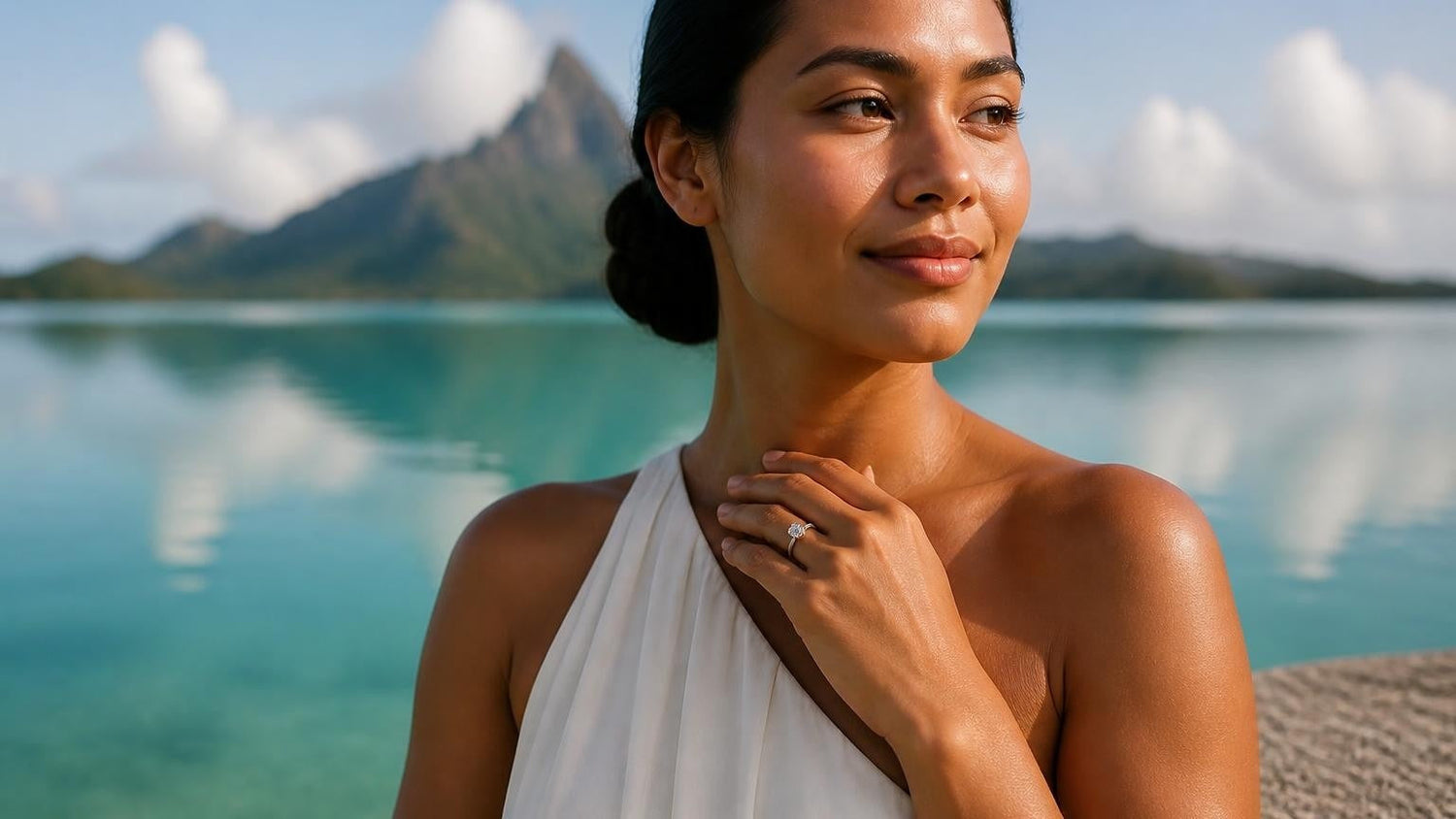
Two things define French Polynesian engagements today. The first is geography: Bora Bora has become one of the world's most iconic proposal destinations, its overwater bungalows and turquoise lagoon framing moments that couples travel from every continent to experience. The second is local tradition: Tahitian black pearl rings are not merely a souvenir category — they are a genuinely cherished engagement gift, their iridescent green-black lustre unlike anything produced elsewhere on earth. As an overseas collectivity of France, French Polynesia follows French civil customs: both the engagement ring and the wedding band are worn on the left hand. (If you are curious how this varies around the world, see our guide to which hand the engagement ring is worn on.)
The ring itself has changed more in the past five years than in the previous fifty. The diamond solitaire remains the reference point — but what sits in the setting is now a genuine open question.
Traditional Engagement Ring Options in French Polynesia
Diamonds have long been the most aspirational choice for engagement rings in French Polynesia, with three coloured gemstones and the Tahitian pearl close behind.

- Diamonds — the classic. Brilliance, fire, and a century of symbolism. Quality is graded by the 4 Cs: carat, cut, colour and clarity. A well-cut one-carat mined diamond in French Polynesia typically starts around USD 5,000–10,000 for the stone alone.
- Sapphire — the second most popular choice. Prized for its deep blue, its hardness, and its association with wisdom and fidelity. A favourite for couples who want colour with durability.
- Emerald — the deep green of renewal. Rarer and softer than sapphire, it rewards a protective setting and careful wear.
- Ruby — passion in mineral form. Durable, rare, and unmistakable.
- Tahitian black pearl — the island's own jewel. Cultured in the lagoons of the Tuamotu and Gambier archipelagos, Tahitian pearls display a unique iridescent peacock-green lustre found nowhere else. Pearl engagement rings are a genuinely local tradition — Robert Wan boutiques and the Marché de Papeete are the places to see the full range.
For the band, yellow gold, white gold and rose gold remain the traditional choices, with platinum at the top of the price range.
The Rise of Alternative Engagement Ring Options in French Polynesia
As awareness of the environmental and ethical cost of diamond mining has grown, French Polynesia couples have moved towards alternatives in significant numbers. Three options dominate.
- Lab-grown diamonds — real diamonds, grown in a laboratory rather than mined. Chemically and optically identical to mined diamonds, typically 60–80% less expensive, and now widely available. Browse our lab-grown diamond collection for IGI-certified pieces.
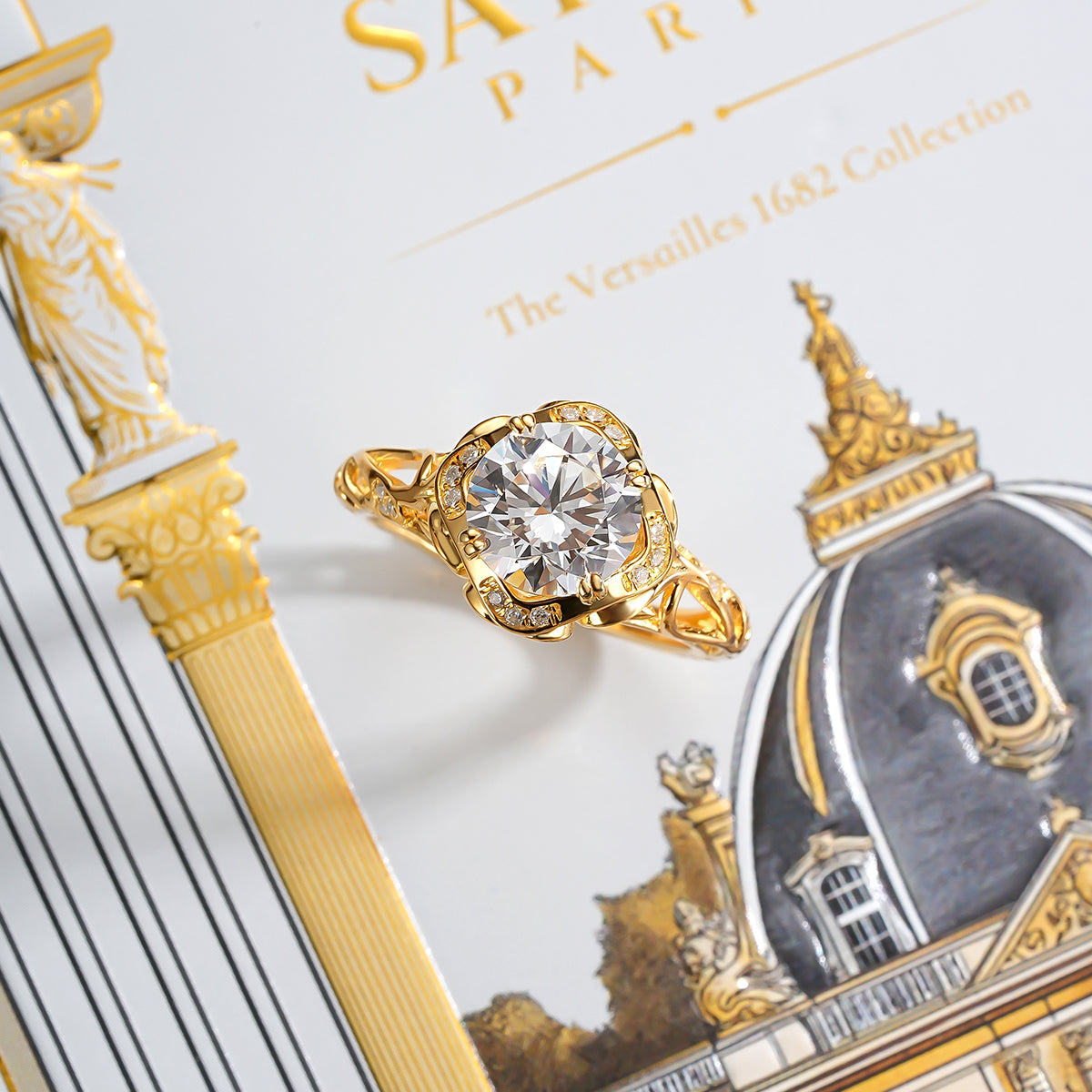
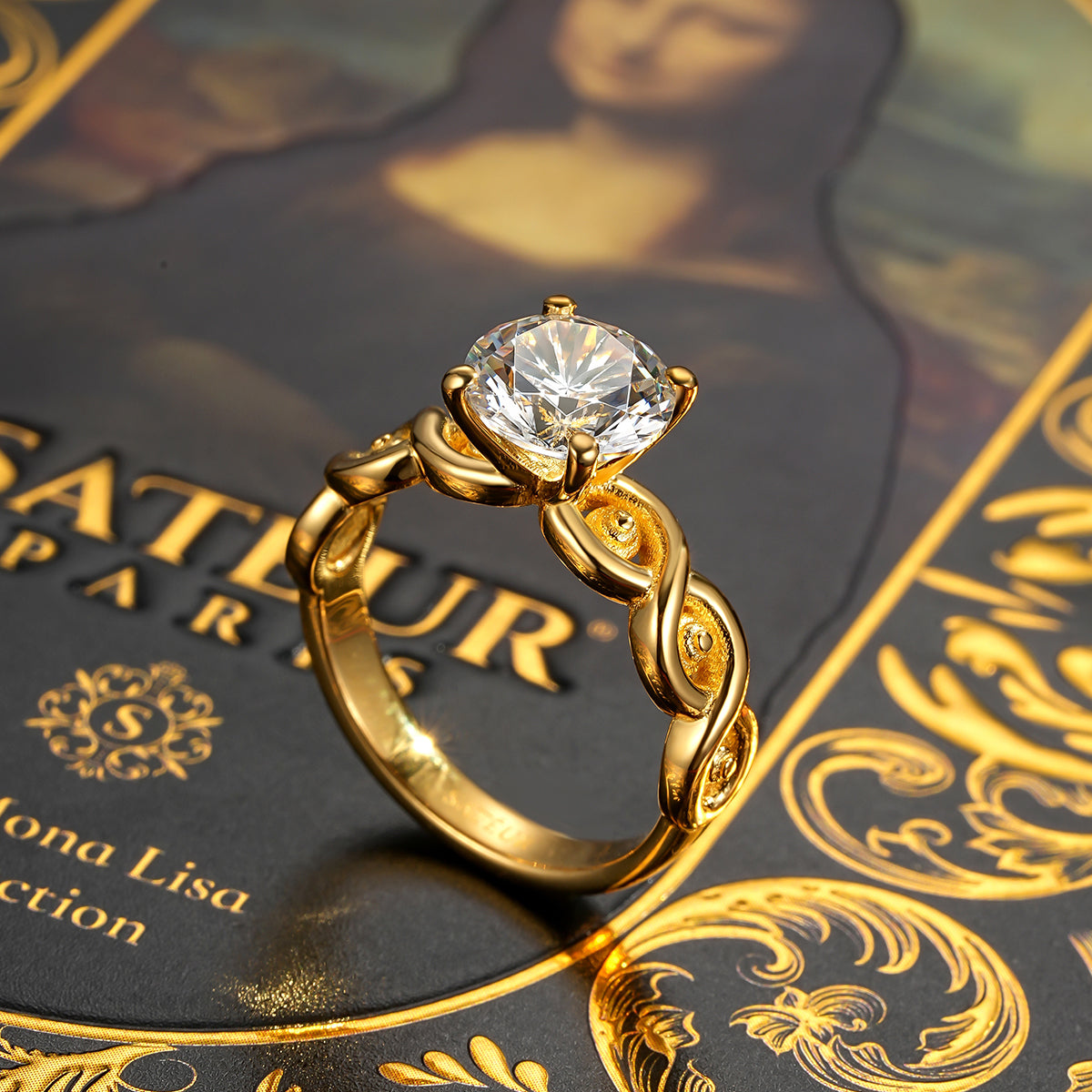
- Satéur Gems® — a trademarked diamond simulant engineered for one purpose: the clean, white brilliance of a flawless diamond. Indistinguishable from a fine diamond with the naked eye, hand-set in an 18k white-gold finish band, from $138 (≈16,400 CFP). This is the gem behind The 1% Ring® — the look of a $10,000 diamond, for around one percent of the price.
- Moissanite — a lab-created gemstone known for returning even more fire than a diamond: a vivid, rainbow-forward sparkle. Extremely durable and openly disclosed, moissanite rings start from about $98 (≈11,650 CFP).

The Benefits of Alternative Engagement Ring Options in French Polynesia

The case for an alternative is straightforward, and it is why this market has grown so quickly across the Pacific.
- The price. The same visual presence for a fraction of the cost. The savings often fund the overwater bungalow honeymoon, the wedding itself, or the first home.
- The ethics. Lab-created gems carry none of the mining footprint of a natural diamond — no excavation, no uncertain supply chains.
- The look. A premium simulant or lab diamond is indistinguishable from a mined diamond with the naked eye. Across the table, on the hand, in photographs — nobody knows but you.
Value is not what you pay. It is what you choose.
Where to Buy Engagement Rings in French Polynesia?
French Polynesia has a small but highly concentrated jewellery market — the finest names are clustered in Papeete and at the luxury resorts of Bora Bora. These are the names worth knowing.
- Satéur — the online choice for intelligent value. A trademarked diamond simulant with the look of a flawless diamond from $138 (≈16,400 CFP), trusted by 100,000+ customers across 150+ countries, with free delivery to French Polynesia and 30-day returns.
- Robert Wan Pearl Museum & Boutiques (Papeete) — the world's leading Tahitian pearl house. Robert Wan built the modern Tahitian pearl industry and his Papeete boutiques and museum remain the definitive address for black pearl engagement rings set with the finest cultured pearls from French Polynesian lagoons.
- Tahia Collins (Papeete) — the most internationally acclaimed French Polynesian jewellery designer. Her Papeete boutique offers contemporary pearl and fine jewellery that blends Polynesian motifs with Parisian craft sensibility. A genuine local institution.
- Vaima Centre jewellers (Papeete) — Papeete's main shopping centre on Rue du Général de Gaulle houses several jewellery boutiques, including pearl specialists. The most accessible concentration of bridal jewellery in Tahiti.
- Marché de Papeete pearl vendors — the Municipal Market is where artisan pearl merchants sell directly, often at prices below boutique level. An authentic buying experience and the best place to see the full range of Tahitian pearl grades.
- Bora Bora resort boutiques — the St Regis Bora Bora, Four Seasons Bora Bora and Bora Bora Pearl Beach Resort all operate boutiques stocked with pearl and diamond engagement jewellery, catering specifically to destination-proposal couples. Expect premium pricing but exceptional curation.
- Vaitape wharf boutiques (Bora Bora) — the main village on Bora Bora has a cluster of jewellery shops near the wharf, accessible to day visitors and cruise guests.
Visit more than one address. Compare pearl grade certificates if you are buying a Tahitian pearl ring, and ask for GIA or IGI certification for any diamond. The spread between a resort boutique and a direct pearl vendor at the Marché can be significant — for a gem that looks identical across the table.
What's the Right Budget for an Engagement Ring in French Polynesia?

Ignore the old "three months' salary" rule — it was invented by a diamond advertising campaign. In reality, most couples in French Polynesia spend between USD 1,500 and USD 6,000 on an engagement ring, with a growing share choosing an alternative gem for well under USD 500. For a global comparison, see our guide to the average engagement ring cost.
Here is what each path costs in French Polynesia today:
| Option | Typical price (1 carat) | What you get |
|---|---|---|
| Mined diamond | USD 5,000–USD 10,000+ | The traditional stone, with the traditional markup |
| Lab-grown diamond | USD 1,000–USD 3,000 | A real diamond, grown not mined — IGI-certifiable |
| Satéur Gems® | From $138 (≈16,400 CFP) | The clean, white look of a flawless diamond — The 1% Ring® |
| Moissanite | From ~$98 (≈11,650 CFP) | A lab-created gemstone with more fire than a diamond |
Three principles for setting your number:
- Set a budget you are comfortable with. A ring should never put a couple in debt before the marriage begins.
- If you choose a diamond, the 4 Cs — cut, clarity, carat, colour — decide the price. Cut matters most for sparkle.
- Decide what the money is for. If it is for the look and the moment, an alternative delivers both — and funds the honeymoon in Bora Bora that comes after.
Satéur Destinée Ring

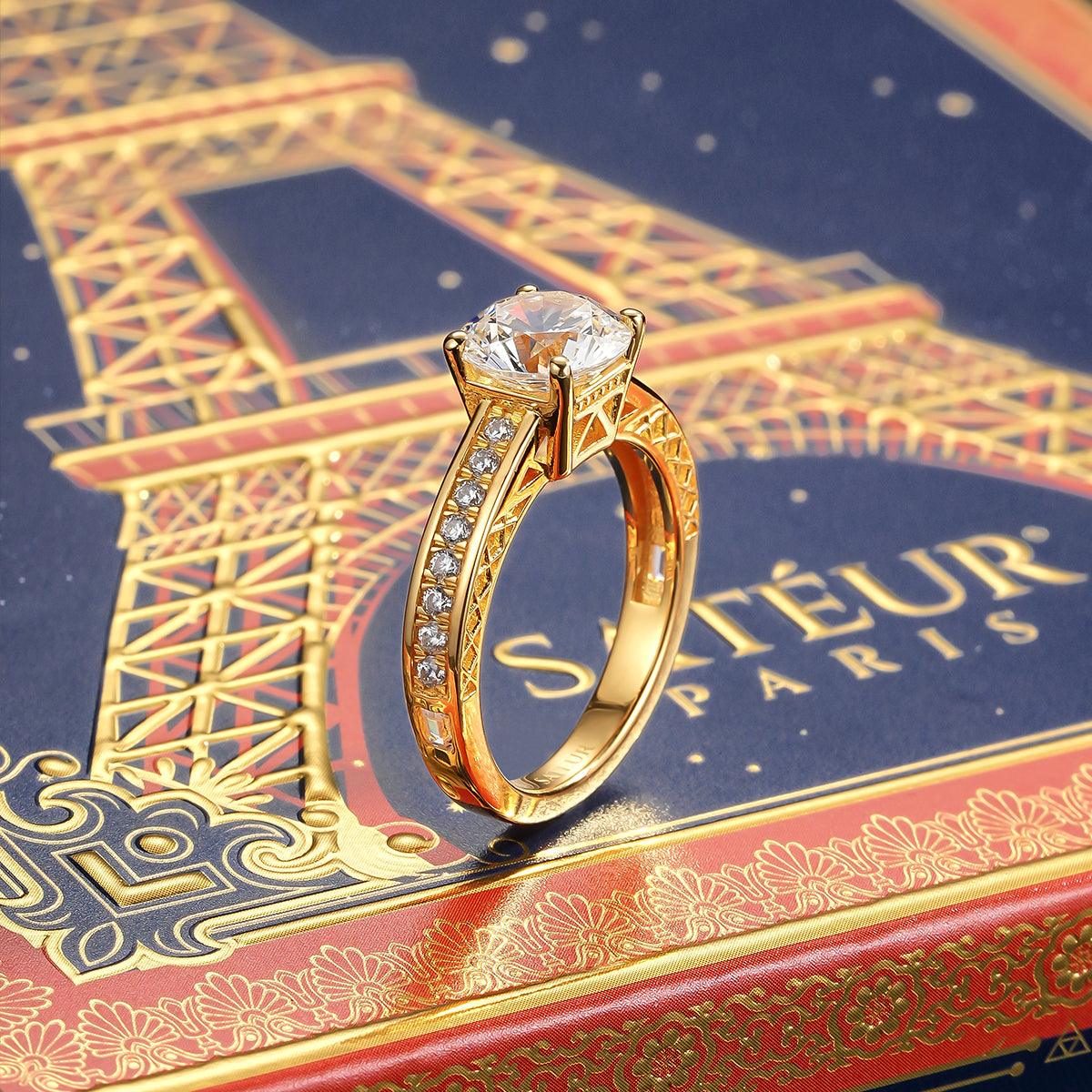
The Satéur Destinée Ring™ is the piece that built The New Diamond Standard® — and the reason over 100,000 couples across 150+ countries chose differently.
- The gem. A round-cut Satéur Gems® centrepiece, available from 1 to 7 carats, graded in the D–F colourless range. The clean, white brilliance of a flawless diamond — indistinguishable with the naked eye.
- The setting. Hand-set in an 18k white-gold finish band with a classic six-prong solitaire profile.
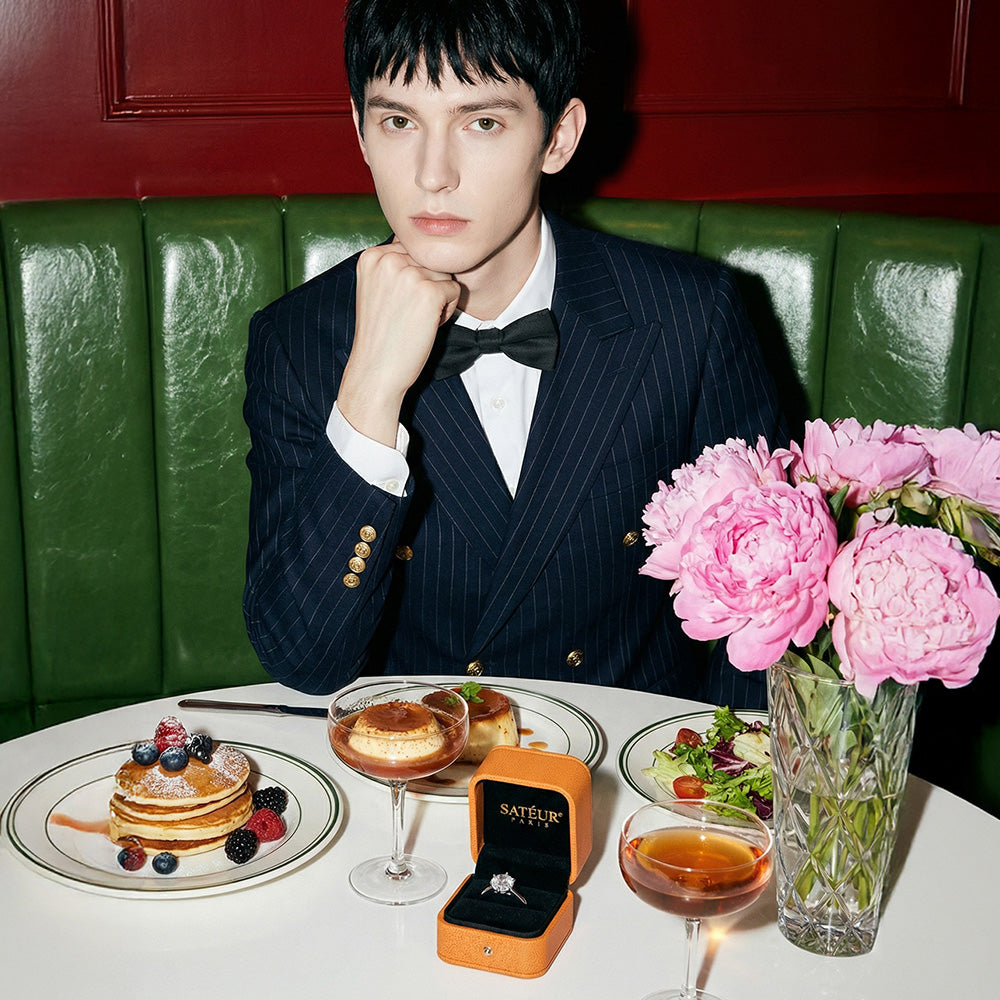
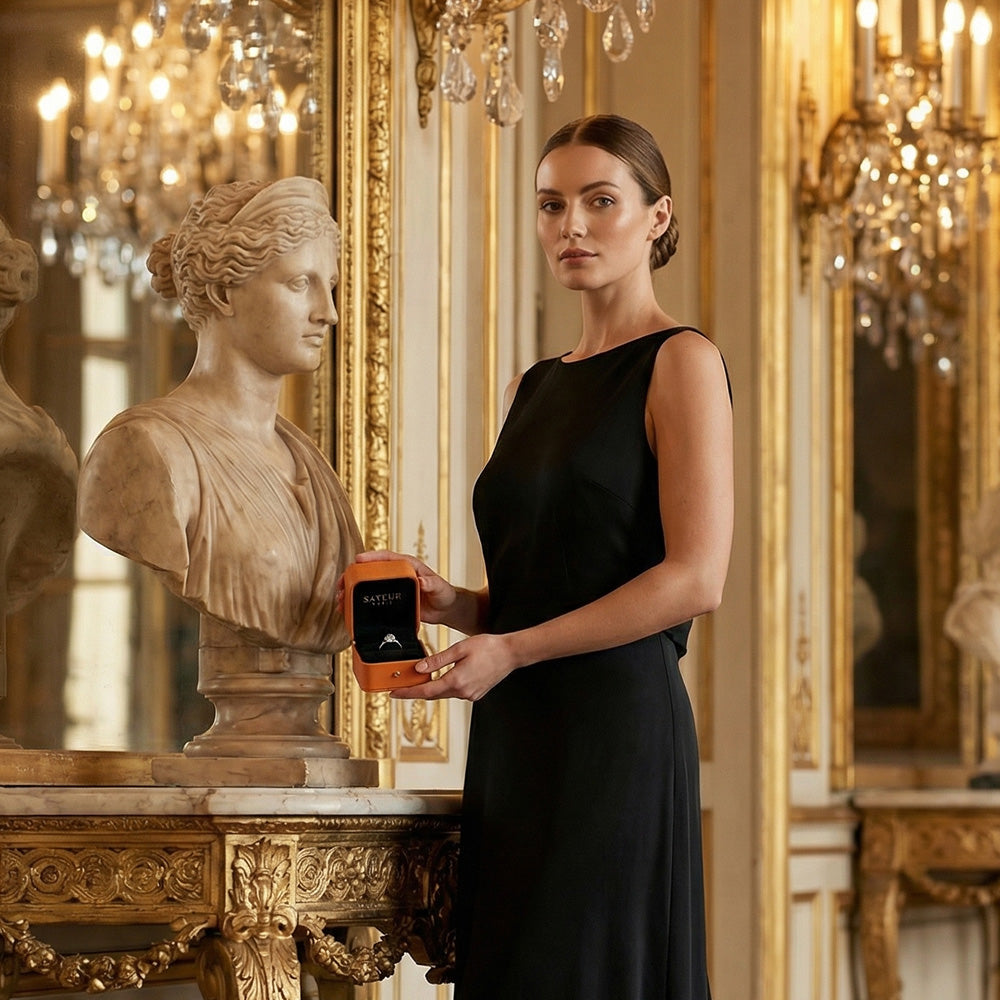
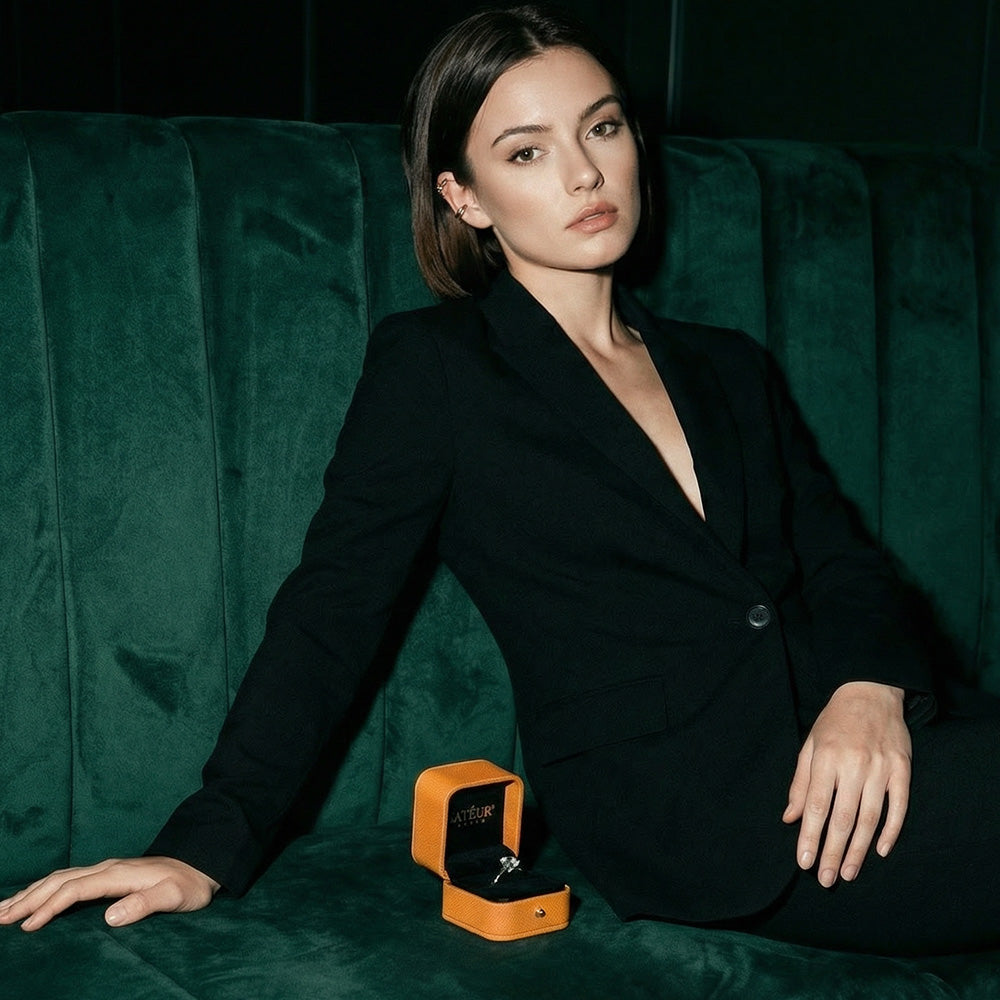
- The presentation. Each ring arrives in the signature orange Satéur box with built-in LED light — made for the overwater-bungalow moment of the proposal.
- The terms. Free delivery to French Polynesia, 30-day returns, and Lifetime Satéur Care.
- The price. From $138 — about 16,400 CFP. Compare to a $10,000 mined diamond.
It is not a diamond, and it does not pretend to be. It is a different answer to the same question: how do you give the look, the moment and the meaning — without the markup.
Conclusion
French Polynesia gives couples every option: world-class Tahitian pearl houses for those who want something genuinely local, a maturing lab-grown market for the diamond traditionalist, and alternatives that deliver the same presence for one percent of the price.
The right choice is not about what resort boutiques expect. It is about what the two of you value — the look, the origin, the budget, and what the savings could build instead. Trends fade. Taste holds.
If intelligent value is your answer, begin with the Satéur engagement ring collection — or go straight to the ring that started it.

Satéur Destinée Ring™
The look of a flawless diamond — from $138, delivered free to French Polynesia.
Compare to a $10,000 mined diamond
Joined by 100,000+ couples across 150+ countries.
Shop the Destinée RingFree worldwide shipping · 30-day returns · Lifetime Satéur Care
Frequently Asked Questions
What is the best affordable engagement ring in French Polynesia?
The Satéur Destinée Ring™ is the leading affordable engagement ring available in French Polynesia — a trademarked diamond simulant with the clean, white look of a flawless diamond, from $138 (≈16,400 CFP), with free delivery to French Polynesia and 30-day returns. For a distinctive local alternative, Tahitian black pearl rings from Robert Wan or Tahia Collins in Papeete are a genuinely celebrated local choice at a range of price points.
How much does an engagement ring cost in French Polynesia?
Most couples spend between USD 1,500 and USD 6,000. A one-carat mined diamond ring typically starts around USD 5,000–10,000. Tahitian black pearl engagement rings range from CFP 50,000 to CFP 300,000 depending on pearl quality. Premium alternatives such as Satéur Gems® start from $138 (≈16,400 CFP) and moissanite from about $98 (≈11,650 CFP).
Which hand do French Polynesia couples wear the engagement ring on?
French Polynesia follows French civil tradition: both the engagement ring and the wedding band are worn on the left hand. As an overseas collectivity of France, the islands follow the same customs as metropolitan France in this respect.
Where should I buy an engagement ring in Papeete or Bora Bora?
In Papeete: Robert Wan Pearl Museum & Boutiques and Tahia Collins are the finest local names, both on or near the Rue du Général de Gaulle and Vaima Centre. The Marché de Papeete is the best place for direct pearl buying. In Bora Bora: the St Regis, Four Seasons and Pearl Beach Resort boutiques cater to destination proposals; the Vaitape wharf has more accessible options. Online, Satéur delivers free to all of French Polynesia with 30-day returns.
Does Satéur deliver to French Polynesia?
Yes. Satéur ships free to French Polynesia, with 30-day returns and Lifetime Satéur Care. The Satéur Destinée Ring™ starts from $138 (≈16,400 CFP) and arrives in the signature orange LED presentation box — ideal for a Bora Bora or Tahiti proposal.
Are lab-grown diamonds popular in French Polynesia?
Yes, and growing. Lab-grown diamonds are chemically and optically identical to mined diamonds at roughly 60–80% less cost. French Polynesia couples increasingly choose them alongside simulants such as Satéur Gems® for value and ethical reasons — particularly for destination-wedding budgets where travel costs are already significant.
















Leave a comment
This site is protected by hCaptcha and the hCaptcha Privacy Policy and Terms of Service apply.