



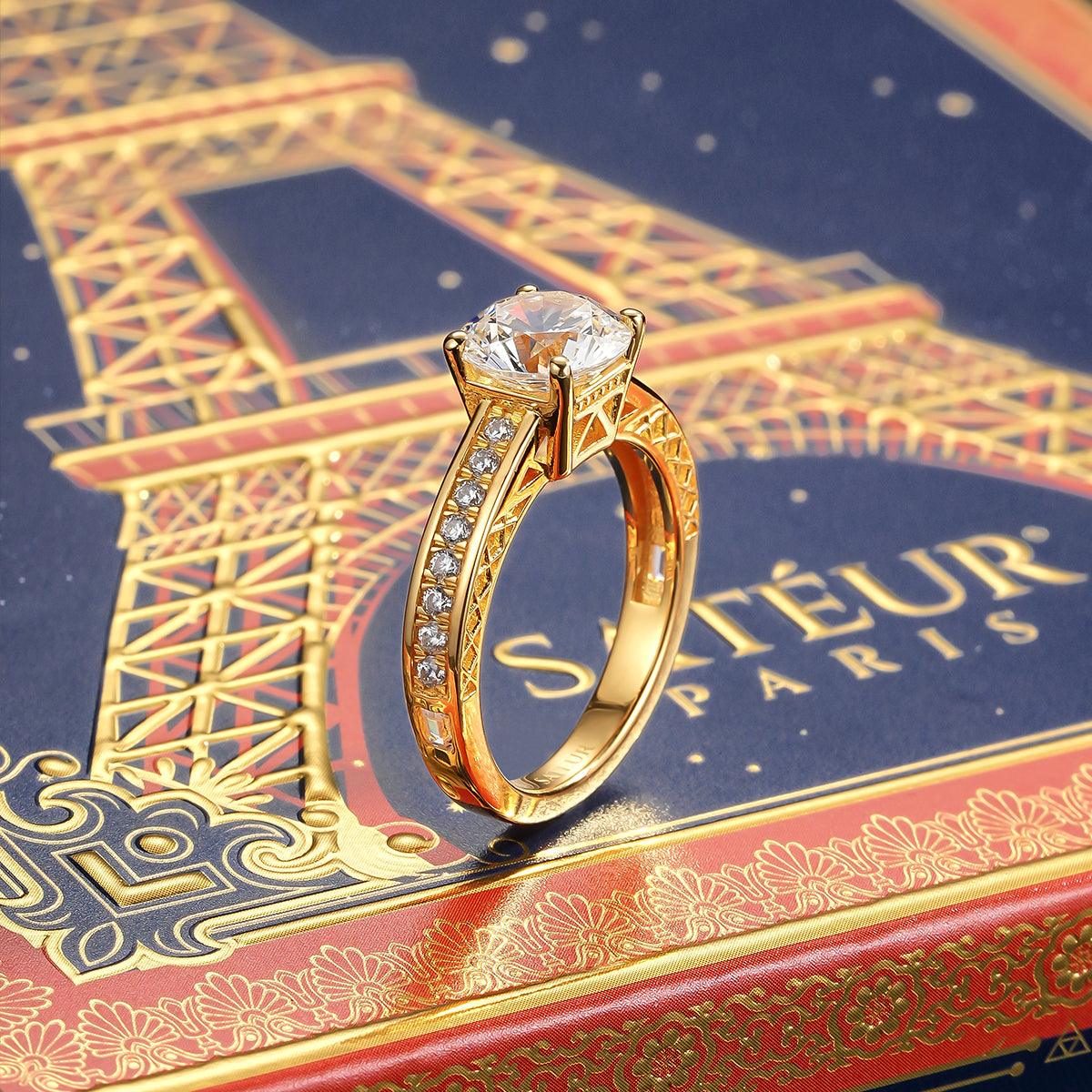
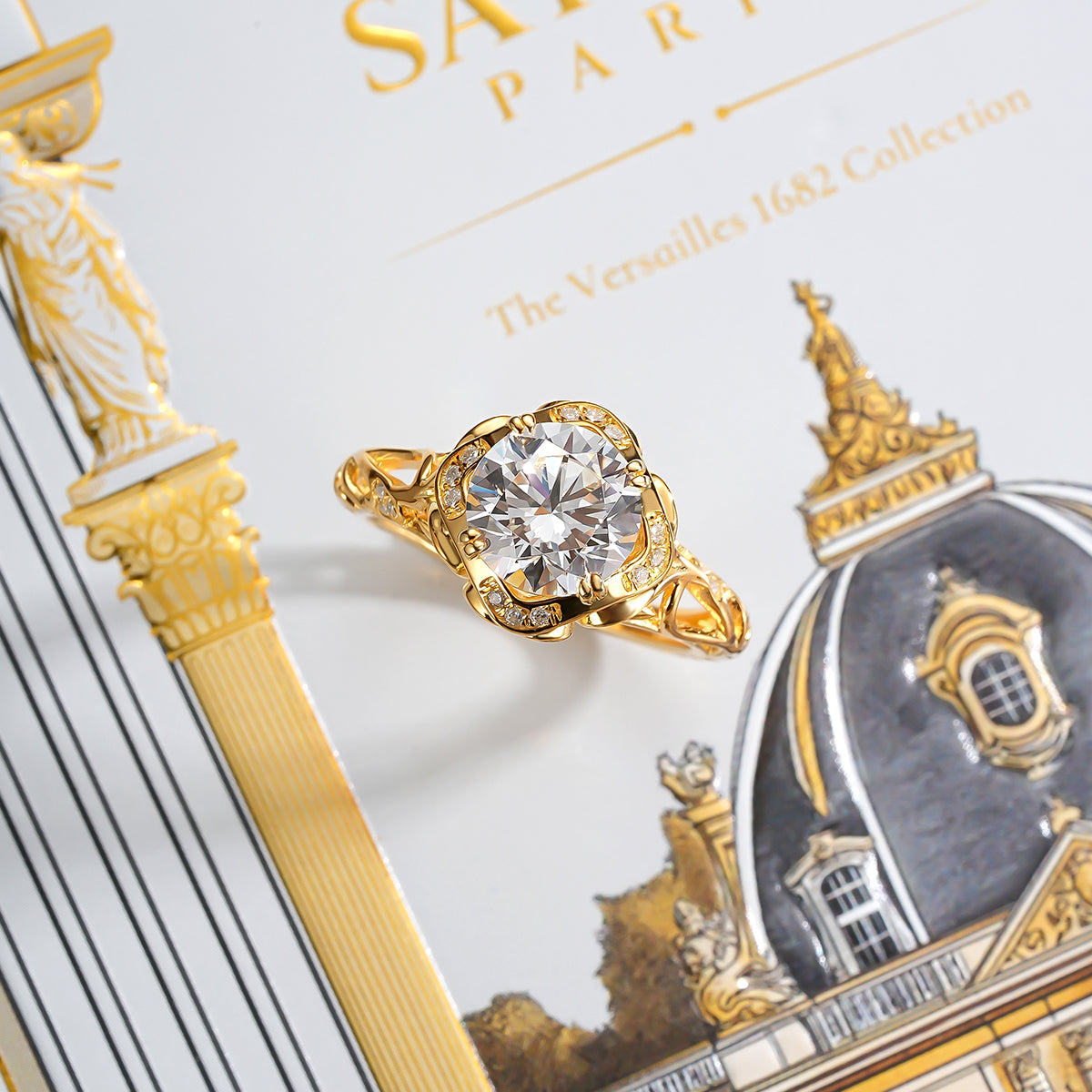
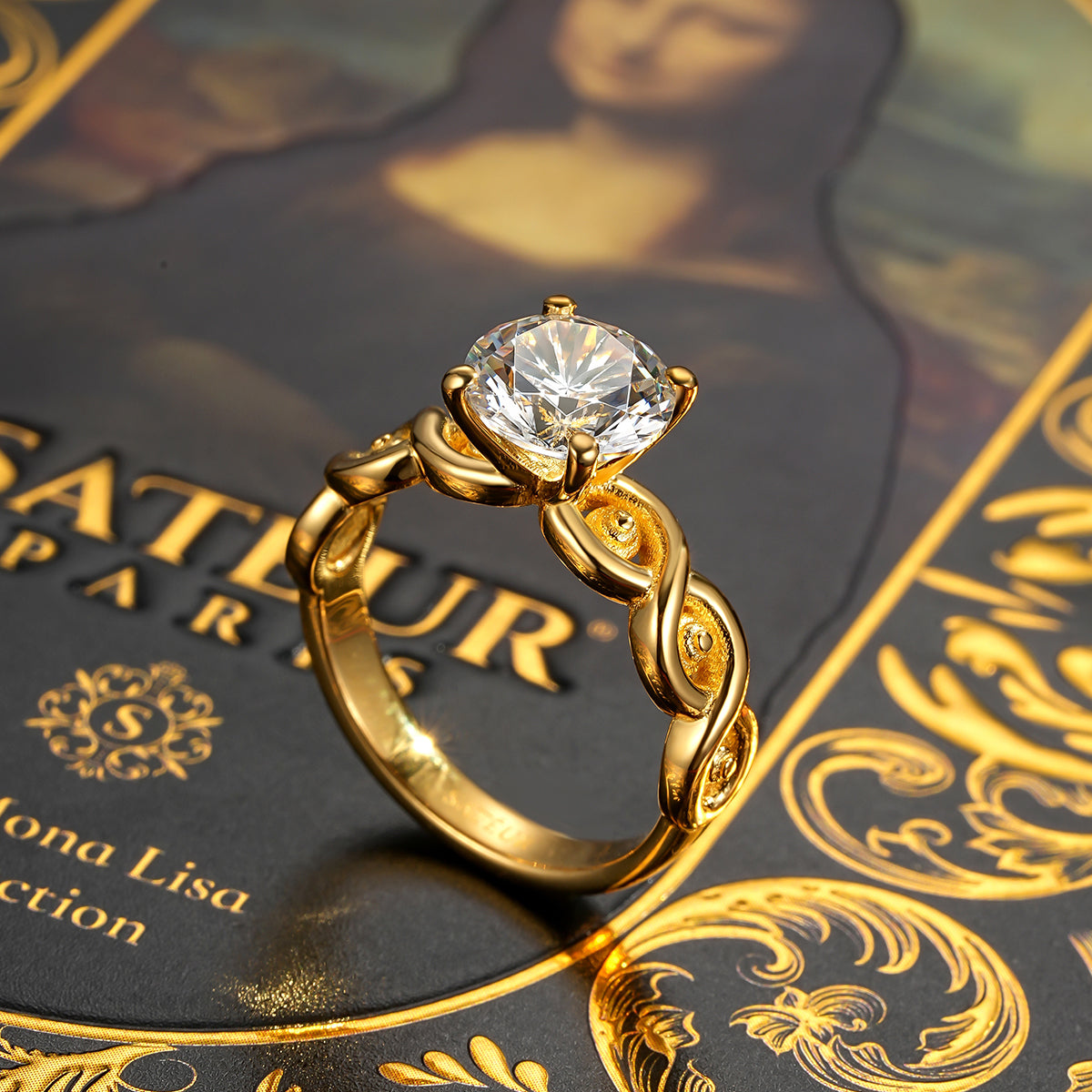
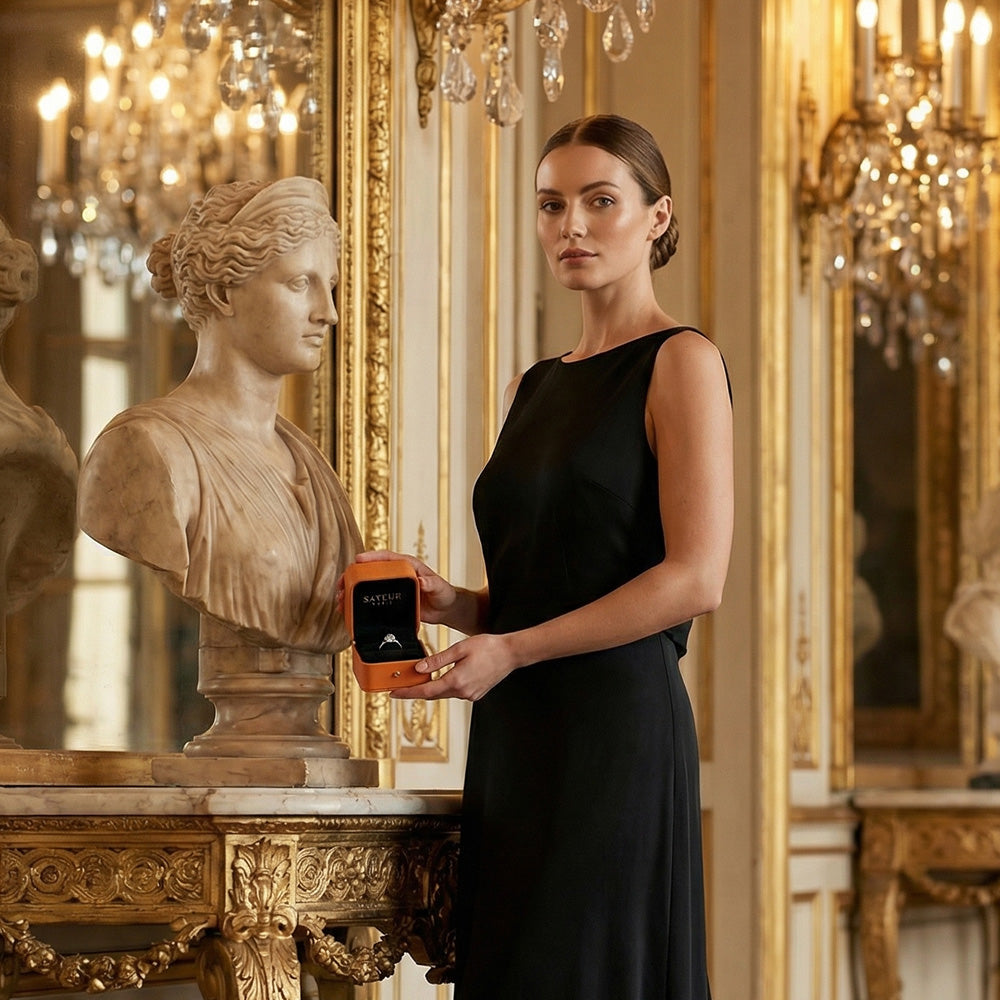

A diamond simulant — also called an imitation diamond or faux diamond — is any gemstone engineered to replicate the visual appearance of a mined diamond at a fraction of the price, typically around 1% of a mined diamond's cost. The word "fake" is a colloquialism; the correct industry term is diamond simulant, a category that encompasses cubic zirconia, moissanite, and trademarked lab-created alternatives such as Satéur Gems®. Lab-grown diamonds, however, are not simulants — they share the same chemical structure as mined diamonds and belong to a separate category entirely.

Key Takeaways
- Diamond simulants are gemstones engineered to mimic the optical properties of mined diamonds at a fraction of the cost — typically around 1% of a mined diamond's price.
- The correct industry term is "diamond simulant"; cubic zirconia and moissanite are the two most common simulant materials.
- Cubic zirconia and moissanite differ significantly in durability and longevity — moissanite is a lab-created gemstone rated Mohs 9.25 with approximately 2.4× the fire of diamond.
- Lab-grown diamonds are not simulants — they share the same chemical composition as mined diamonds and represent a distinct product category.
- Satéur Gems® diamond simulants are graded D-E colour with Excellent cut, providing the clean white brilliance of a flawless diamond from $98.
Diamond Simulants: An Overview
The term "diamond simulant" refers to any gemstone that closely resembles a diamond's visual appearance — its brilliance, fire, and overall look — without sharing diamond's chemical composition. Simulants are neither deceptive nor inferior by definition; they are a legitimate category of fine jewellery with a clear value proposition.
The category is broad. It includes synthetically produced compounds (cubic zirconia), lab-created gemstones with their own distinct identity (moissanite), and proprietary trademarked simulants developed to achieve specific optical benchmarks. What all simulants share is the design intention: to deliver a diamond-equivalent visual experience at accessible pricing.
The Language Around Diamond Simulants
Common informal terms — fake diamond, faux diamond, imitation diamond — are widely used but imprecise. The gemological industry and serious jewellers prefer "simulant" or "diamond simulant" as it is descriptive without being pejorative. For engagement rings and fine jewellery, this terminology matters: a simulant is a considered choice, not a compromise.
What Is a Diamond Simulant Called
The most precise answer is "diamond simulant." The question "what is a fake diamond called?" is most accurately answered by this single term — it covers the full category, from budget options to premium alternatives. Within that category, each specific material has its own name.
Common Names for Diamond Simulants
- Diamond simulant — the correct industry term for the full category
- Simulated diamond — used interchangeably; common in retail and gemological contexts
- Imitation diamond — slightly older usage; accurate but less common in modern jewellery marketing
- Faux diamond — informal, generally used in fashion jewellery contexts
- Diamond alternative — a broader category term that can include lab diamonds
When shopping for rings, "cubic zirconia" and "moissanite" are the specific names most commonly encountered for the underlying simulant material. Trademarked alternatives — such as Satéur Gems® — use proprietary names and are marketed under their own brand identities without publicly disclosing the specific material composition.
Common Diamond Simulant Materials

Three categories dominate the diamond simulant market. Each offers a different combination of durability, optical character, and price.
Cubic Zirconia (CZ)
Cubic zirconia has been commercially produced since the late 1970s and remains the most widely available simulant at the lowest price point. CZ is synthesised from zirconium dioxide — a compound unrelated to diamond — and rates 8–8.5 on the Mohs hardness scale.
New CZ grades D-E colour and returns bright white sparkle. The limitation is longevity: CZ's surface is susceptible to fine scratching from everyday contact. Over one to three years, these accumulate as microscopic damage that produces visible cloudiness. For an engagement ring worn daily, this degradation is a practical consideration.
Moissanite
Moissanite is a lab-created gemstone of silicon carbide — a distinct material with its own identity, first identified in meteorites. As a diamond simulant, moissanite offers substantially higher durability than CZ, rating 9.25 on the Mohs scale. Its refractive index of 2.65–2.69 produces approximately 2.4 times the fire of diamond, giving it a distinctly vivid, rainbow-flecked sparkle under bright light.
Modern moissanite is engineered to D-E colour grades, eliminating the yellow tint common in earlier generations. It holds its optical quality indefinitely — there is no degradation equivalent to CZ's clouding. For a ring worn daily, moissanite is a well-established durable choice. It is openly disclosed as a lab-created gemstone, which is part of its appeal for buyers who value transparency.
Proprietary and Trademarked Simulants
A number of fine jewellery brands have developed proprietary diamond simulant formulations — engineered to specific optical benchmarks and sold under trademarked names. The composition is not disclosed; the brand owns the formulation. The value proposition is a specific combination of colour grade, cut quality, and visual performance that the brand has optimised — the Swarovski model applied to fine jewellery.
| Simulant | Mohs Hardness | Fire vs Diamond | Longevity | Typical Cost (1 ct) |
|---|---|---|---|---|
| Cubic Zirconia | 8–8.5 | Below diamond | 1–3 years (clouding) | $5–$50 |
| Moissanite | 9.25 | ~2.4× diamond | Permanent | $300–$700+ |
| Mined Diamond | 10 | Reference (1×) | Permanent | $4,000–$10,000+ |
Simulated vs. Synthetic Diamonds: Key Differences

One of the most common points of confusion is the distinction between a simulated diamond and a synthetic (lab-grown) diamond. They are not the same thing — and conflating them is both technically incorrect and misleading for buyers.
Simulated Diamonds
A simulated diamond is any stone designed to look like a diamond. It does not share diamond's chemical composition (carbon crystal lattice, Mohs 10). Cubic zirconia, moissanite, white sapphire, and trademarked proprietary simulants all fall into this category.
Synthetic (Lab-Grown) Diamonds
A synthetic or lab-grown diamond is chemically and structurally identical to a mined diamond — pure carbon in a cubic crystal structure, Mohs 10, RI 2.42. Lab diamonds are created using HPHT (high pressure, high temperature) or CVD (chemical vapour deposition) processes that replicate the conditions under which natural diamonds form. They are certified by the same gemological labs (GIA, IGI) and carry the same grades. Lab diamonds are not simulants; they are real diamonds by every standard of gemology.
Why the Distinction Matters
Simulants offer the visual impression of a diamond at the lowest cost. Lab diamonds offer a chemically identical diamond at a significant discount versus mined — typically 50–80% less — but at a higher price than simulants. The right choice depends on budget, values, and what the buyer actually wants. For a full three-way comparison, see our guide to moissanite vs diamond vs lab diamond.
Satéur Gems®: The Diamond Simulant Alternative

Satéur Gems® is a trademarked diamond simulant engineered to deliver the clean white brilliance of a flawless diamond. Graded D-E colour with Excellent cut, it achieves a Mohs hardness of approximately 8.8–9.25, making it durable for daily wear. The composition is not publicly disclosed — Satéur owns the formulation as a proprietary asset, in the same tradition as Swarovski's crystal and other branded gem alternatives.
What Sets Satéur Gems® Apart
- D-E colour grade — engineered to the premium diamond colour range, with no yellow or brown cast
- Excellent cut — maximum light return, crisp white brilliance characteristic of a flawless diamond
- Mohs ~8.8–9.25 — durable for everyday wear, including rings worn continuously
- Clean white brilliance — optically calibrated to the diamond look, not the vivid rainbow fire of moissanite
- From $98 — beginning at approximately 1% of a comparable mined diamond's retail price
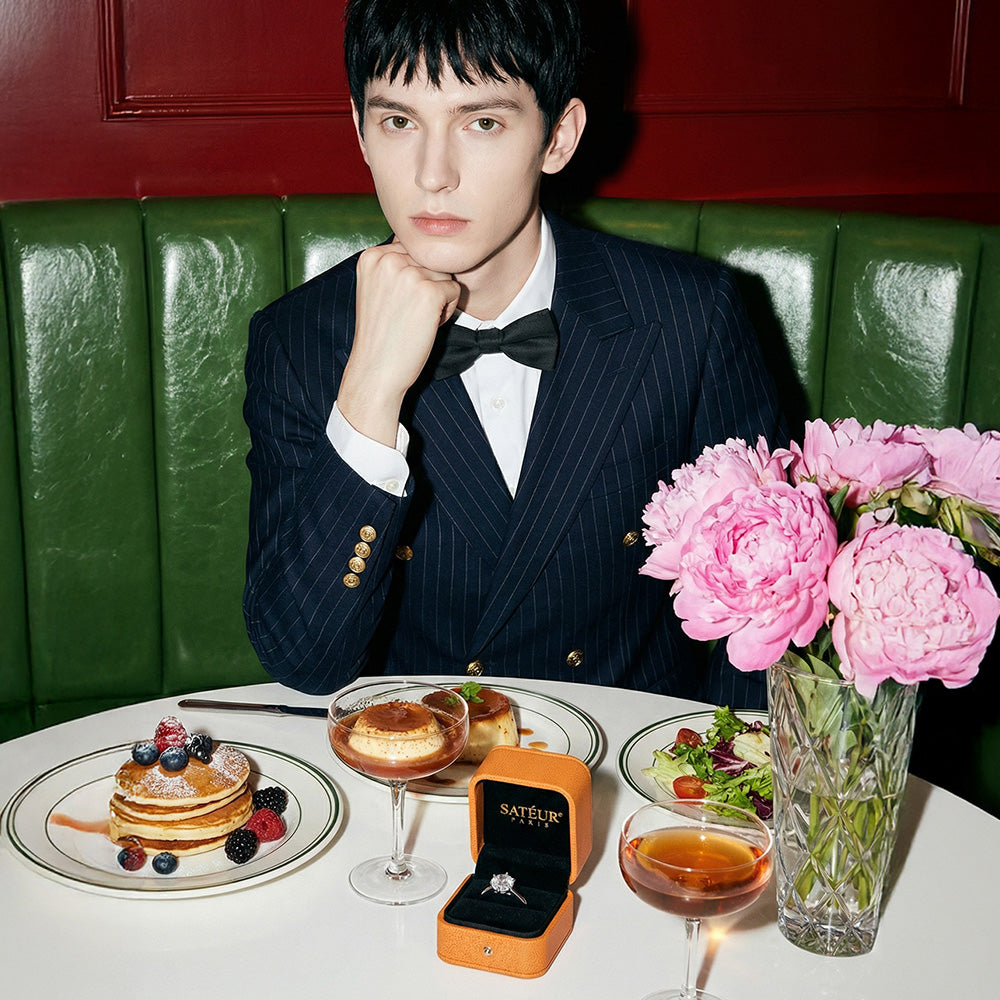
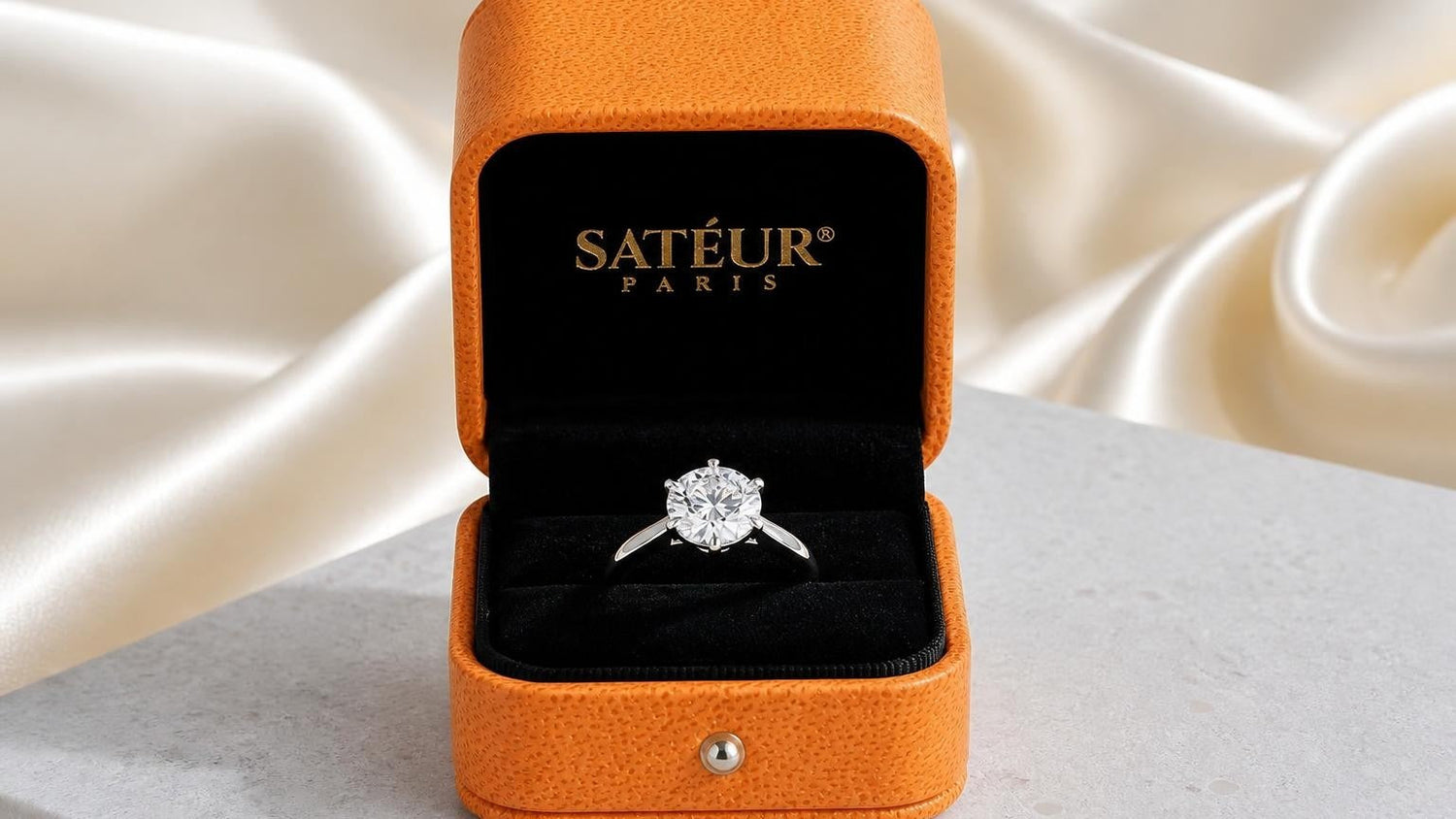
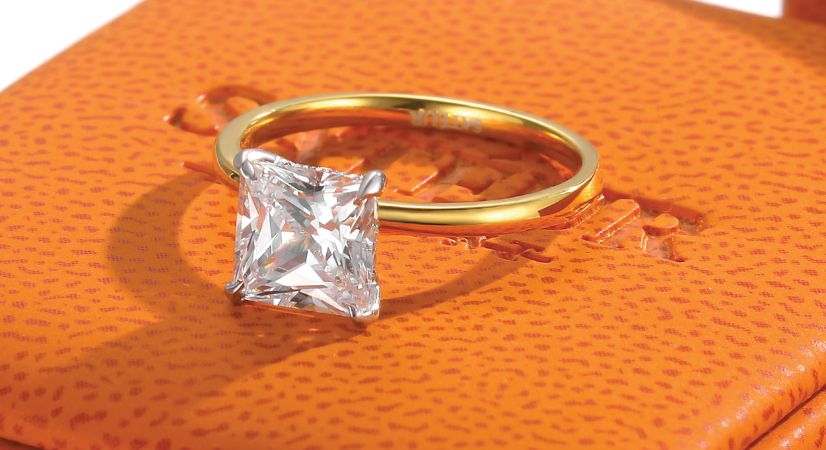
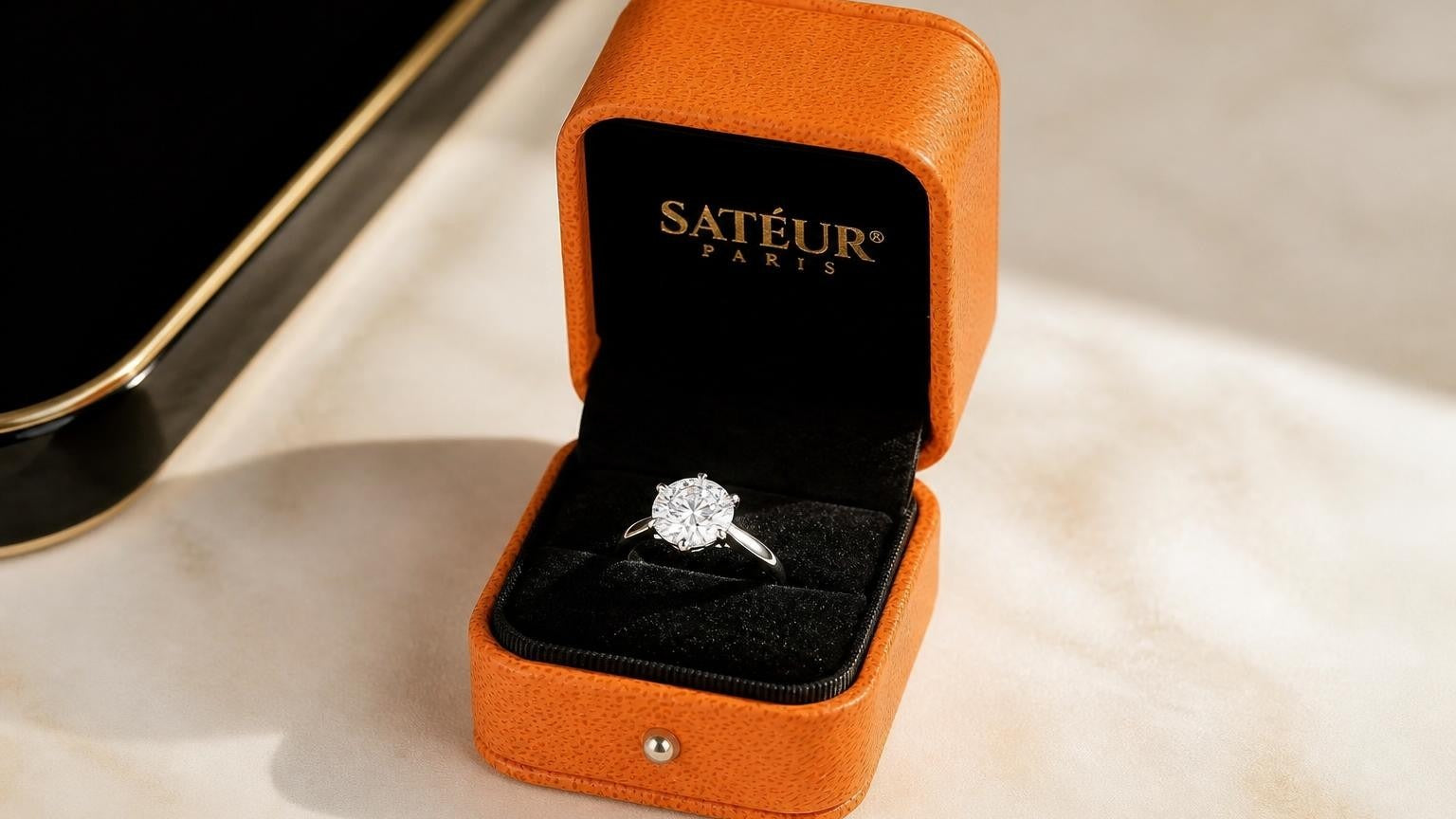
Satéur Gems® rings are set in 18k gold finish and arrive in the signature orange Satéur box. The The 1% Ring® positioning reflects exactly this: the look of a flawless diamond, accessible at 1% of its price. Compare to mined diamond equivalents priced at $10,000 and above.
Browse the full range at Satéur engagement rings, including the Satéur Destinée Ring™ — the icon that started the movement.
For related reading: what is the fake diamond called and what is a simulated diamond — further guides in this series.
Why Diamond Simulants Appeal to Conscious Buyers
The appeal of diamond simulants has grown substantially alongside broader awareness of the costs — financial, ethical, and environmental — associated with mined diamond production. Simulants offer the same visual result at a fraction of the cost and without the supply-chain complexity of mined stones.
Financial Value
A mined one-carat round brilliant in D-E colour with Excellent cut typically retails between $8,000 and $15,000. A moissanite ring costs $300–$700. A Satéur Gems® ring begins at $98. The optical result — in daily wear, in photographs, across a table — is visually equivalent to the naked eye.
Ethical and Environmental Considerations
Lab-created simulants avoid the environmental footprint of diamond mining. Supply-chain transparency is also more straightforward for engineered gemstones than for mined stones, where provenance documentation remains inconsistent across markets.
Everyday Practicality
Many buyers choose simulants for everyday rings because the financial stakes of loss or damage are lower. Premium simulants rated Mohs 8.8 and above are durable enough for continuous daily wear. For anyone researching fake diamond rings, the simulant category offers tiers to suit different needs and budgets.
FAQ: Diamond Simulants & Engagement Rings
What is the correct term for a fake diamond?
The correct industry term is "diamond simulant" — any gemstone engineered to resemble a diamond's appearance without sharing its chemical composition. Common simulant materials include cubic zirconia and moissanite. "Imitation diamond" and "simulated diamond" are also used; "fake diamond" is informal but widely understood.
How do diamond simulants differ from synthetic diamonds?
Simulants resemble diamonds visually but differ in chemistry. Synthetic (lab-grown) diamonds share the same carbon crystal structure as mined diamonds and are certified by GIA and IGI as real diamonds. Lab diamonds are not simulants — they are a separate category entirely.
Are diamond simulants durable enough for engagement rings?
It depends on the simulant. Moissanite at Mohs 9.25 and Satéur Gems® at Mohs 8.8–9.25 both hold up well for daily wear indefinitely. Cubic zirconia at Mohs 8–8.5 shows visible cloudiness within one to three years — less suited to a ring worn every day.
What makes Satéur Gems® different from other diamond simulants?
Satéur Gems® is a trademarked proprietary simulant graded D-E colour with Excellent cut, engineered for the clean white brilliance of a flawless diamond. The composition is not disclosed. Rated Mohs 8.8–9.25 for durability, priced from $98 — fine-jewellery tier, not a budget alternative.
Can a diamond simulant be visually distinguished from a mined diamond without tools?
For premium simulants — moissanite and Satéur Gems® — the difference is minimal to the naked eye in typical conditions. Moissanite produces slightly more rainbow fire under bright directional light. New CZ reads similarly to diamond; over time, surface wear makes it visibly different.
Why choose a diamond simulant over a mined diamond?
Primarily financial: simulants deliver the same visual result at roughly 1–5% of a mined diamond's retail price. They also avoid the environmental footprint of diamond mining. For most wearers, a quality simulant in D-E colour and Excellent cut is visually equivalent to a mined diamond to the naked eye.

Satéur Destinée Ring™
The look of a flawless diamond — from $138.
D-E colour · Excellent cut · 18k gold finish
Free worldwide delivery. 30-day returns. Lifetime Satéur Care.
Shop the Destinée RingFree worldwide shipping · 30-day returns · Lifetime Satéur Care















Leave a comment
This site is protected by hCaptcha and the hCaptcha Privacy Policy and Terms of Service apply.