








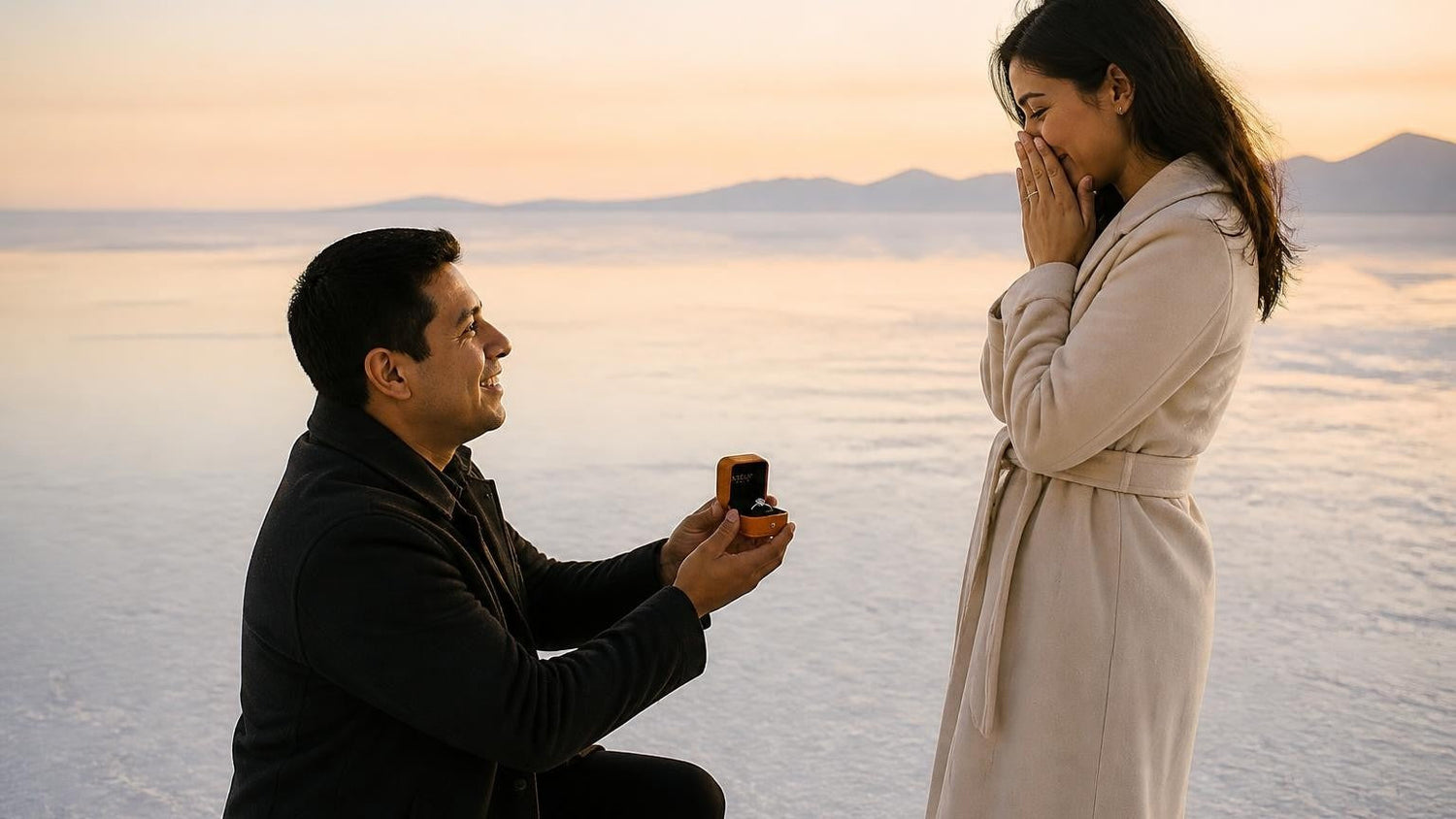
The best places to propose in Bolivia are the mirror-still Salar de Uyuni at sunrise, sacred Isla del Sol on Lake Titicaca, and the cable-car cityscape above La Paz. Each gives you a setting no studio could stage — sky, salt and water turned into a backdrop for the question.
Below you will find all nine spots ranked by atmosphere and access, a real one-day itinerary built around Uyuni, honest notes on timing, cost and permits, and the one detail most couples leave to the last minute: the ring. For where to actually buy it in-country, read our companion guide to the best engagement rings in Bolivia.
Key Takeaways
- Top three proposal spots: Salar de Uyuni at sunrise, Isla del Sol on Lake Titicaca, and the La Paz cable-car cityscape from El Alto.
- Best time of day: sunrise or the golden hour before sunset — the Uyuni mirror and Titicaca light both peak then.
- Permit reality: no permit is needed for a private proposal at public sites; pay the small national-park or island entry fee and you are free to ask.
- A Bolivian proposal photographer runs roughly Bs. 700–2,000 (about $100–$290 USD) for a half-day session.
- The Satéur Destinée Ring starts from $138 (≈Bs. 955) — the look of a flawless diamond for 1% of the price.
Few countries hand you scenery like Bolivia. The Salar de Uyuni becomes a perfect mirror after rain, Lake Titicaca holds the deepest blue in the Andes, and La Paz spills down a canyon you cross by cable car. A proposal here is framed by landscape that already feels ceremonial — you barely have to add anything.
But the place is only half of it. The other half is the ring you take out of your pocket at the moment she turns around. That is where Satéur comes in — a range built so the stone matches the setting, not the strain on your savings, spanning the trademarked Satéur Gems®, lab-created moissanite, and IGI-certified lab-grown diamonds.

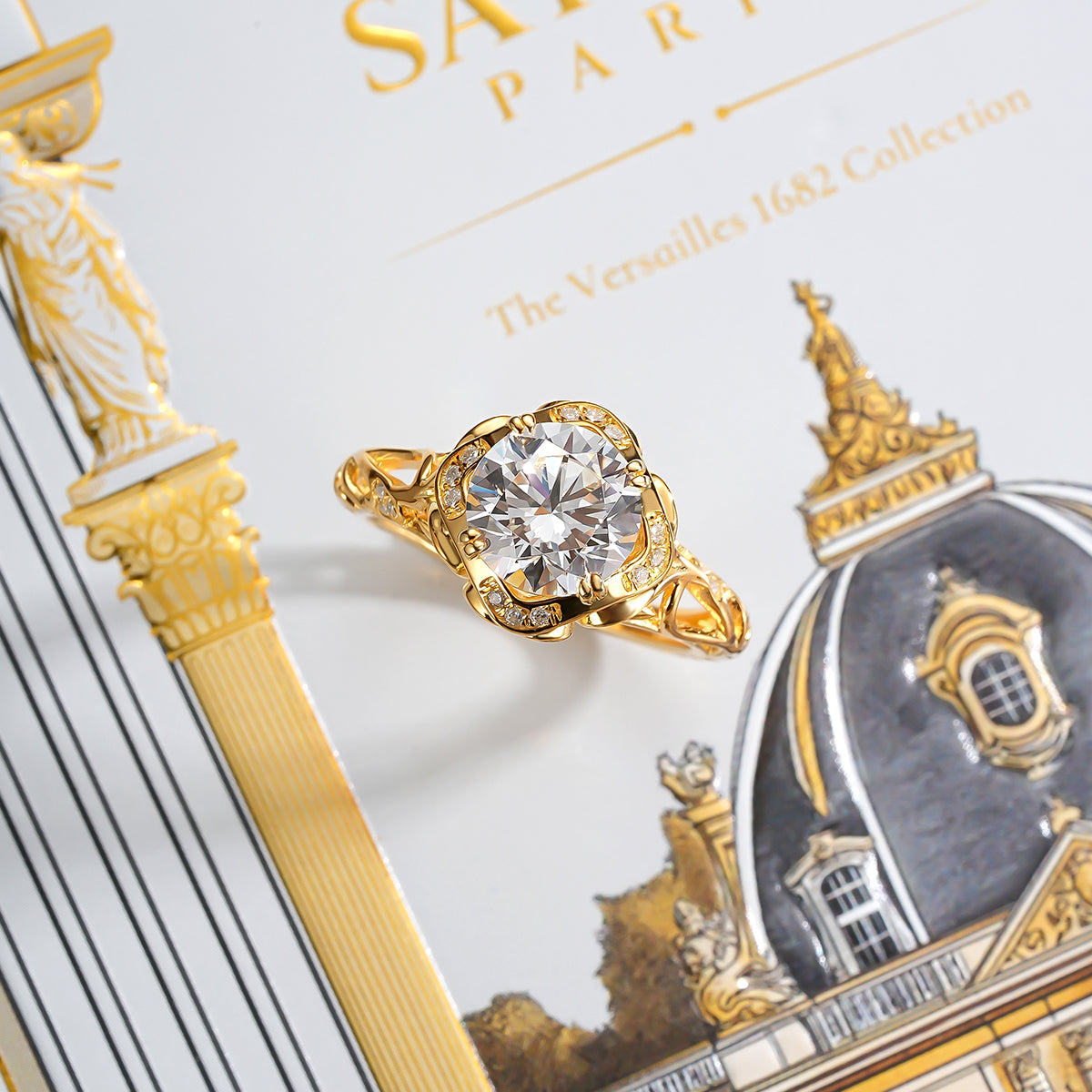
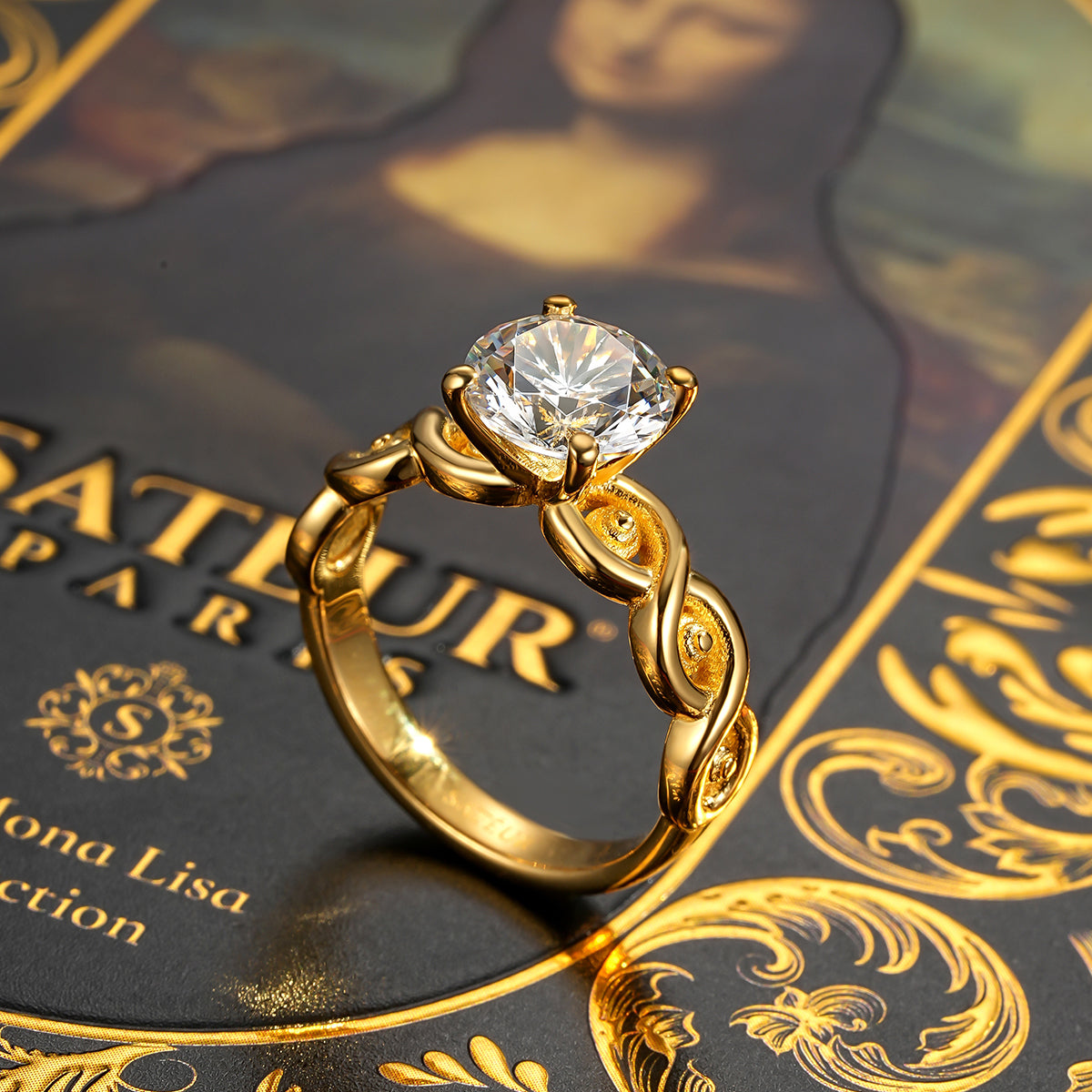
The Satéur Destinée Ring is set with a trademarked diamond simulant — Satéur Gems® — with the clean white brilliance of a flawless diamond, indistinguishable from a fine diamond with the naked eye, in a six-prong 18k white-gold finish. It starts from $138 (≈Bs. 955): the look of a flawless diamond, for 1% of the price.
Satéur ships worldwide and delivers free to Bolivia, so the ring can be in your daypack before you ever reach the salt flats.
Top 9 Romantics Proposal Places for the Perfect "Yes" in Bolivia!
From an Inca birthplace island to the world's largest salt mirror, here are the nine settings worth the trip — ranked for atmosphere, access and the kind of light that makes the moment unforgettable.
Tiwanaku

The Gate of the Sun and the sunken temple at this pre-Inca site give you stone monoliths a thousand years older than anything in Europe — a backdrop that reads as permanence itself. Arrive at opening, around 9:00 am, before the day-trip buses from La Paz roll in, and you can have the Akapana pyramid steps almost to yourselves. Bring a light layer; the altiplano sun is fierce but the wind off the plateau is cold.
Isla del Sol

The mythical birthplace of the Inca civilisation, this car-free island rises straight out of Lake Titicaca's cobalt water, with stone terraces and a horizon of snow peaks. Take the morning boat from Copacabana and walk the ridge path to the northern viewpoint, where the lake opens on both sides — late afternoon light turns the water gold for the photo. Confirm the day's ferry timetable in advance, as island access and northern routes occasionally close, and stay overnight to catch sunrise without the crowds.
Salar de Uyuni

The world's largest salt flat is the iconic Bolivian proposal — in the wet season (roughly December to April) a thin film of water turns the entire plain into a mirror that doubles the sky behind you. Go at sunrise, when the light is soft and the day-tour jeeps have not yet fanned out, and station yourself a short walk from the vehicles so the horizon stays clean. Wear sunglasses and rubber-soled shoes; the glare and the brine are both intense.
La Paz

The world's highest administrative capital spills down a canyon, and the Mi Teleférico cable cars give you a private glass cabin floating over the city lights. Ride the Línea Roja or Línea Amarilla up to El Alto at dusk for the panoramic moment, then come back down to a quiet table in the Sopocachi district. Buy a return ticket and a cabin to yourselves by waiting for an empty car at a quieter station.
Sajama National Park

Home to Nevado Sajama, Bolivia's highest peak, this remote altiplano park frames you against a snow-capped volcano with steam rising from natural hot springs nearby. Plan the question for late afternoon when the mountain catches alpenglow, then warm up in the geothermal pools afterwards. The altitude here is severe — acclimatise in La Paz first and carry water and a warm layer.
Titicaca National Reserve

The protected shoreline of Lake Titicaca gives you reed-lined coves, traditional totora boats and the highest navigable water in the world, far quieter than the island viewpoints. Hire a local boatman in Copacabana for a private morning crossing and ask to pause at a calm inlet for the moment. Mornings are stillest before the afternoon wind picks up across the lake.
Cochabamba

Bolivia's warm, easy-going valley city sits beneath the Cristo de la Concordia, one of the tallest Christ statues in the world, with a cable car and a viewpoint over the whole valley. Ride up in the late afternoon for the city panorama, then propose at the mirador as the lights come on below. It is the gentlest climate on this list — perfect if Andean altitude is a concern.
Madidi National Park

One of the most biodiverse places on earth, Madidi drops from the Andes into Amazon rainforest, offering river lodges, canopy walkways and macaw clay licks for couples who want an adventure proposal. Book a multi-day eco-lodge stay through Rurrenabaque and ask the guide to set aside a quiet sunset on the river. Go in the dry season (May to October) for clearer trails and easier flights in.
Chacaltaya Mountain

Once the world's highest ski resort, Chacaltaya now gives day-trippers from La Paz a 5,400-metre summit with views to Huayna Potosí and, on a clear day, Lake Titicaca far below. Drive up mid-morning before afternoon cloud builds, and walk the short final ridge to the old lodge for the panorama. This is the most extreme altitude on the list — acclimatise fully and keep the moment brief.
Whichever setting wins, the photo of her hand is the one you will frame — and the salt flats are the easiest to build a full day around. Here is how a Uyuni proposal day actually runs, and you can cross-check ring options first in our Bolivia engagement-ring guide.
Propose in Bolivia - Your Perfect 1-Day Itinerary
This is a real, runnable proposal day built around the Salar de Uyuni — the single most photogenic spot in Bolivia. Base yourself in the town of Uyuni the evening before. Arrange a private 4x4 and driver-guide rather than a shared tour, charge your phone and camera, and slip the Satéur ring box into the inner pocket of your daypack so it never leaves your body. Brief the driver quietly that you plan to propose at sunrise and want ten minutes alone away from the jeep.
4:45 am — Wake and dress in warm layers; pre-dawn on the altiplano is freezing. Meet your driver in the dark.
5:15 am — Drive out onto the flats. In the wet season the headlights catch a sheet of mirror water; keep the ring on you, not in the vehicle.
6:15 am — Reach a clean stretch of salt well away from other jeeps. Step out, let her take in the silence and the colour rising on the horizon.
6:40 am — As the first sun lifts and the sky doubles in the water beneath you, take her hands and ask. Have the driver ready with the camera from a discreet distance.
7:00 am — Celebrate with the thermos of coffee you packed; let the photographer or driver shoot the reflection while the mirror is still perfect.
9:00 am — Drive to the Train Cemetery and Colchani salt-processing village for relaxed celebration photos and a souvenir or two.
1:00 pm — Lunch back in Uyuni, then toast the engagement properly.
Practical notes:
- Time the trip for the wet season (December to April) if you want the mirror effect; the dry season gives the white hexagon pattern instead, which is still striking.
- Book your private 4x4, driver and any photographer at least a week ahead — Uyuni's good operators fill fast in high season.
- Carry the ring box in a zipped inner pocket, not loose: the salt brine is corrosive and the wind is constant.
If you would rather not chase a 4:45 am start, base in La Paz instead and make the El Alto cable-car viewpoint your spot — ride up at dusk, ask as the city lights ignite below, then celebrate over dinner in Sopocachi. Same emotion, no pre-dawn drive.
The Perfect Ring for the Perfect Proposal: Introducing the Satéur
The Satéur Destinée Ring is built for exactly this moment: a round-cut Satéur Gems® centre stone, available from one to seven carats, graded D–F colour and Excellent cut, held in six prongs on an 18k white-gold finish. It is the ring she pictured when she imagined the day — at a price you keep to yourself.

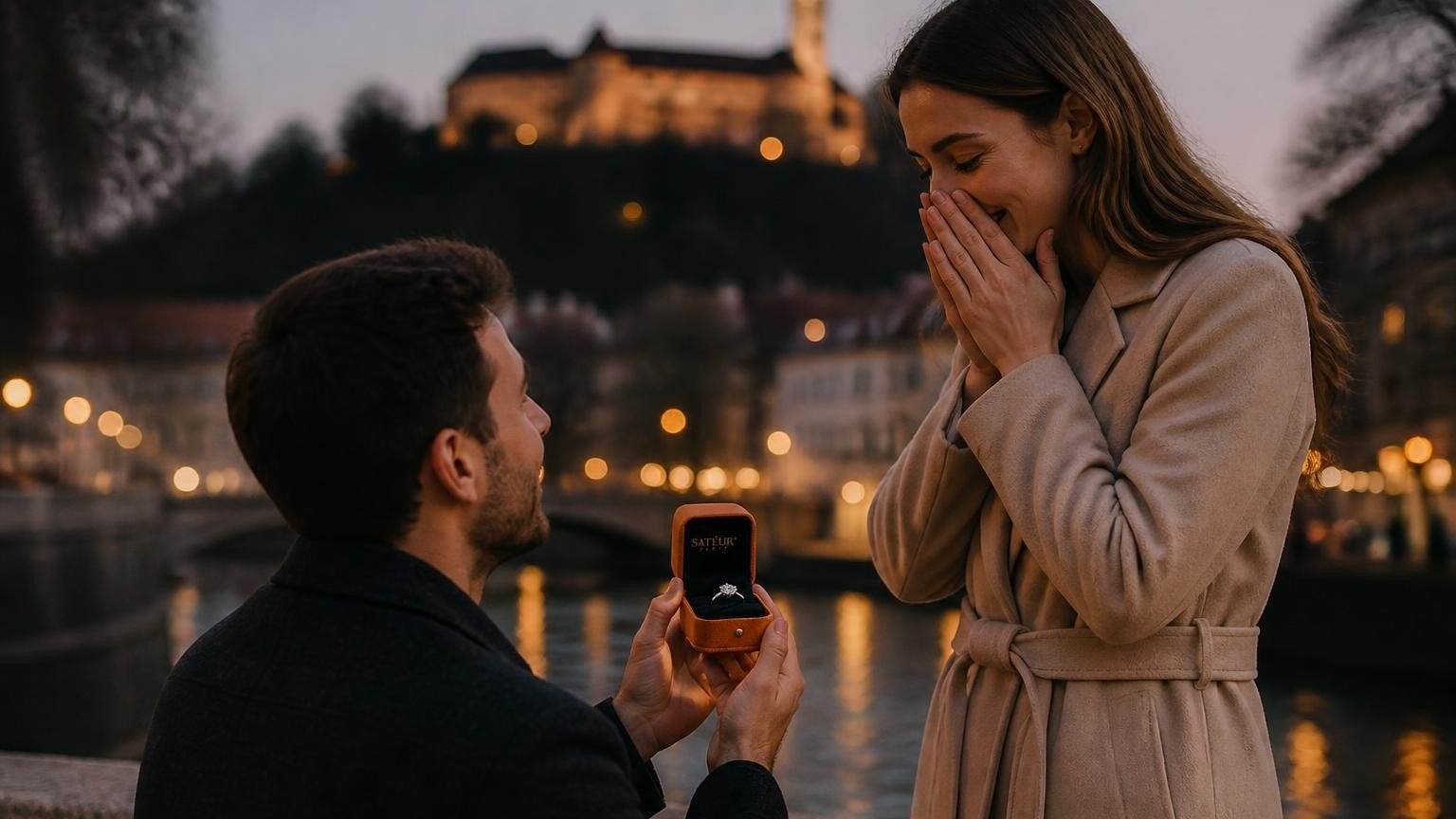
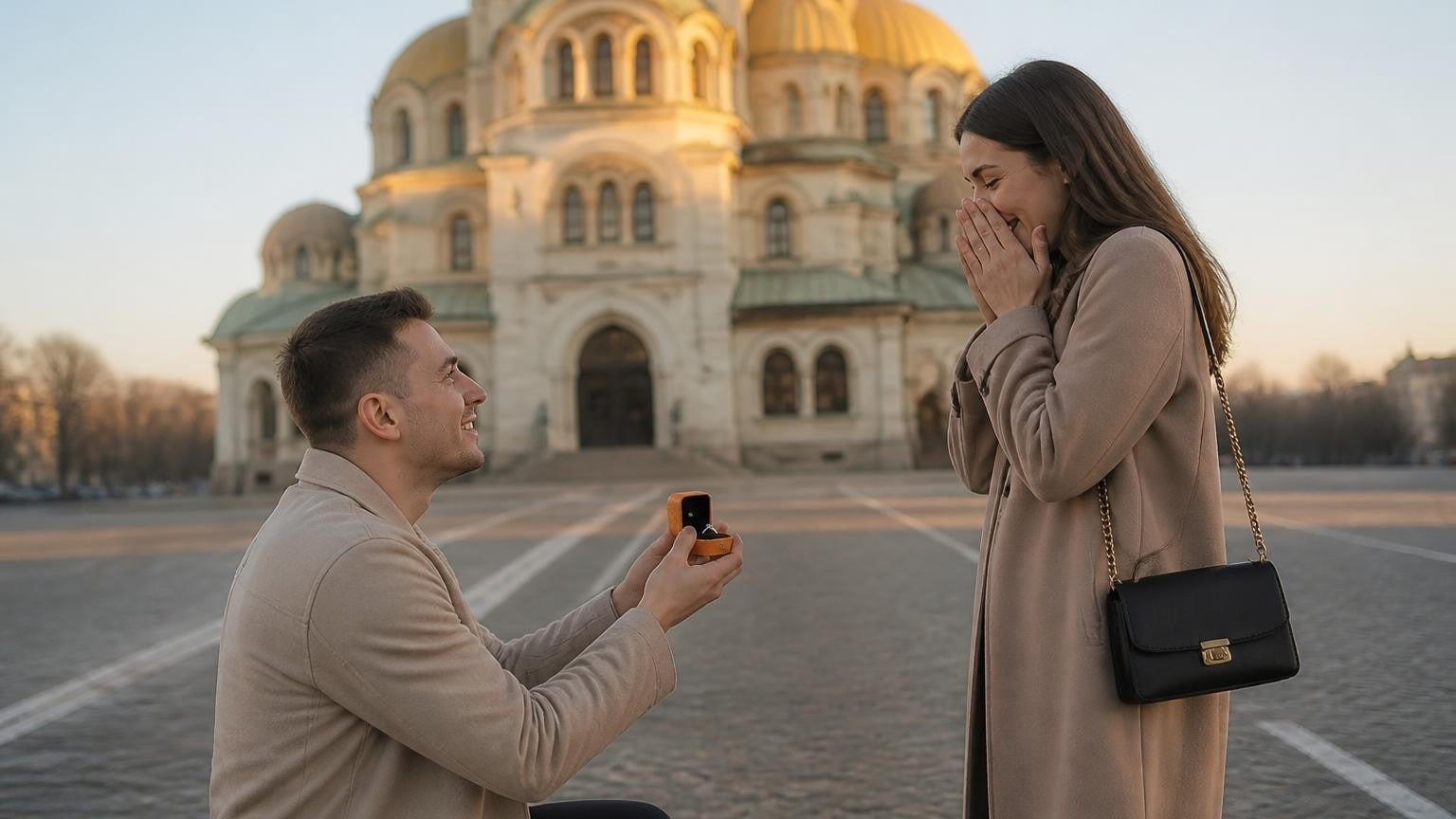
It arrives in the signature orange LED-lit Satéur box, so the reveal looks as considered as the setting around you. The look compares to a $10,000 mined diamond — this is The New Diamond Standard®.
Why couples choose Satéur:
- Value — the look of a flawless diamond for roughly 1% of the mined-diamond price.
- Ethics — Satéur Gems® are crafted in-house and conflict-free, with no mined supply chain.
- Presentation — the orange LED box turns the proposal itself into the unboxing.
- Trust — 100,000+ customers across 150+ countries, 30-day returns, and Lifetime Satéur Care.
- Free delivery to Bolivia — the ring reaches you before the trip begins.
The Destinée is Satéur's No.1 best seller — The 1% Ring® — and there are over 100 designs to choose from across the engagement-ring collection.

Comparison of Satéur Destinée Ring with Traditional Diamonds
Set a Satéur Gems® stone beside a mined diamond and the brilliance reads the same — the clean white fire of a flawless diamond, indistinguishable from a fine diamond with the naked eye, from $138 (≈Bs. 955). Value is not what you pay. It is what you choose.

Moissanite — a lab-created gemstone with even more fire than a diamond, from ~$98 (≈Bs. 678). Browse the moissanite collection.
Satéur Lab Diamonds — IGI-certified, with identical brilliance and hardness to a mined diamond and no mined supply chain. See the lab-grown diamond collection.
Key Takeaways
- Satéur Gems® deliver the look of a flawless diamond for 1% of the price, from $138 (≈Bs. 955).
- Moissanite offers even more fire than a diamond, from ~$98 (≈Bs. 678).
- Satéur Lab Diamonds are IGI-certified with identical brilliance and hardness, conflict-free.
- Every ring ships in the signature orange box with 30-day returns and Lifetime Satéur Care.
Proposing in Bolivia: The Perfect Ring with Ethical and Environmental Considerations
A proposal shouldn't begin with a compromise. Mined diamonds carry a real environmental and human footprint, while Satéur Gems® are crafted in-house, conflict-free, and priced so the ring funds the moment — not the decade of debt after it. In a country where the average couple spends Bs. 1,500–5,000 on a ring, that choice matters.

For the proposal: the Destinée — the look of a flawless diamond, from $138 (≈Bs. 955), delivered free across Bolivia. Discover The 1% Ring®.
Conclusion
Bolivia gives you a backdrop most couples only dream of — salt that mirrors the sky, a sacred island, a city you cross by cable car. Match it with a ring chosen as carefully as the place: explore the lab-grown diamonds, the moissanite range, or The 1% Ring®.
Browse over 100 styles across the engagement-ring collection and let Satéur be part of the story you tell for the rest of your lives.

Satéur Destinée Ring™
The look of a flawless diamond — from $138, delivered free to Bolivia.
Compare to a $10,000 mined diamond
Joined by 100,000+ couples across 150+ countries.
Shop the Destinée RingFree worldwide shipping · 30-day returns · Lifetime Satéur Care
Frequently Asked Questions
Where is the best place to propose in Bolivia?
The Salar de Uyuni at sunrise is the most iconic choice, with the salt flat turning into a mirror of the sky in the wet season. Isla del Sol on Lake Titicaca and the El Alto cable-car viewpoint above La Paz are the strongest alternatives.
What is the best time of day to propose in Bolivia?
Sunrise or the golden hour before sunset. The Uyuni mirror is cleanest and quietest at first light, while Lake Titicaca and the La Paz cityscape look their best as the day softens into evening.
Do I need a permit to propose at a Bolivian landmark?
No permit is required for a private proposal at public sites. You simply pay the standard entry fee for national parks, archaeological sites like Tiwanaku, or island access, and you are free to ask.
How much does a proposal cost in Bolivia?
A proposal photographer runs roughly Bs. 700–2,000 (about $100–$290 USD) for a half-day, plus any private 4x4 or boat hire. The one cost you fully control is the ring: the Satéur Destinée starts from $138 (≈Bs. 955).
Which ring should I choose for a proposal in Bolivia?
The Satéur Destinée Ring — a round-cut Satéur Gems® centre in a six-prong 18k white-gold finish, with the clean white brilliance of a flawless diamond, indistinguishable from a fine diamond with the naked eye, from $138 (≈Bs. 955).
Does Satéur deliver to Bolivia?
Yes. Satéur ships worldwide and delivers free to Bolivia, with 30-day returns and Lifetime Satéur Care, so the ring can be in your hands before the trip begins.

















Leave a comment
This site is protected by hCaptcha and the hCaptcha Privacy Policy and Terms of Service apply.