






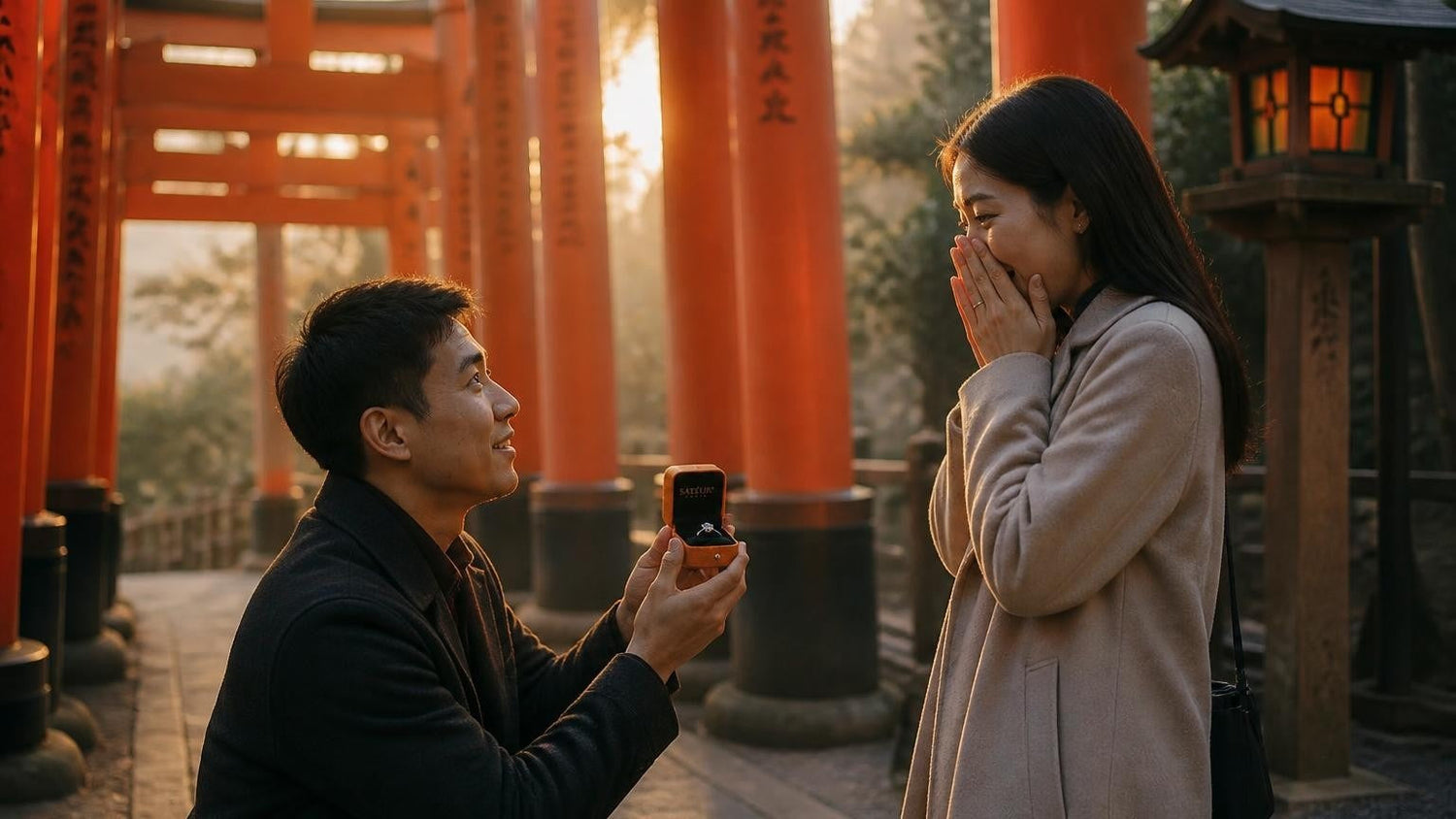
The best places to propose in Japan are the Fushimi Inari torii gates of Kyoto at first light, Mount Fuji mirrored in Lake Kawaguchi at sunrise, and the lantern-lit machiya streets of Gion in the evening. Each one gives you a setting the world recognises and a moment that is entirely your own.
This guide covers the nine most romantic proposal spots in the country, a proven one-day proposal itinerary in Kyoto, what it all costs in yen — and the ring itself, from the best engagement rings available in Japan to the one that fits a proposal budget without looking like it.
Key Takeaways
- The most iconic proposal settings in Japan are Kyoto (Fushimi Inari and Gion), Mount Fuji at Lake Kawaguchi, and the floating torii of Miyajima.
- The best moments are dawn at the temples and golden hour by the lakes — fewer crowds, softer light.
- No permit is needed for a personal proposal at public viewpoints; commercial shoots and tripods at some shrines and parks require permission.
- A proposal photographer in Japan typically costs ¥30,000–¥60,000 per hour.
- The Satéur Destinée Ring gives the look of a flawless diamond from $138 (≈¥21,500), delivered free across Japan.
Introduction
Whether the plan is a torii-lined path at dawn, a quiet lakeside with Mount Fuji on the water, or a paper-lantern street in Kyoto, Japan rewards couples who think about light and timing as much as location. The spots below cover every style of proposal — ceremonial, classic, private — and almost all of them work without a guide, a permit or a four-figure budget.
But it is not only about the location — the ring you propose with matters just as much. This is where Satéur comes in, with a range that spans the trademarked Satéur Gems®, lab-created moissanite and IGI-certified lab diamonds.

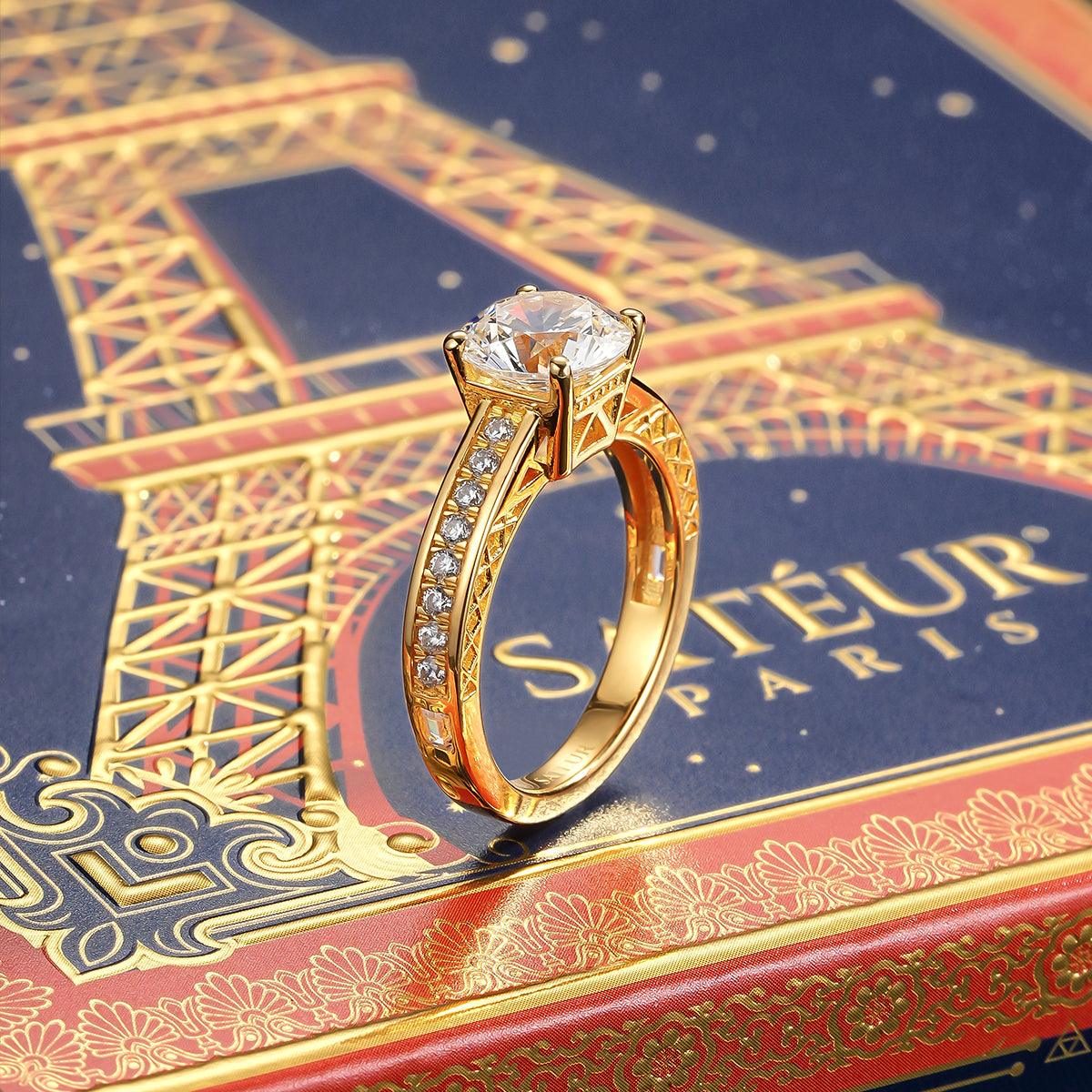
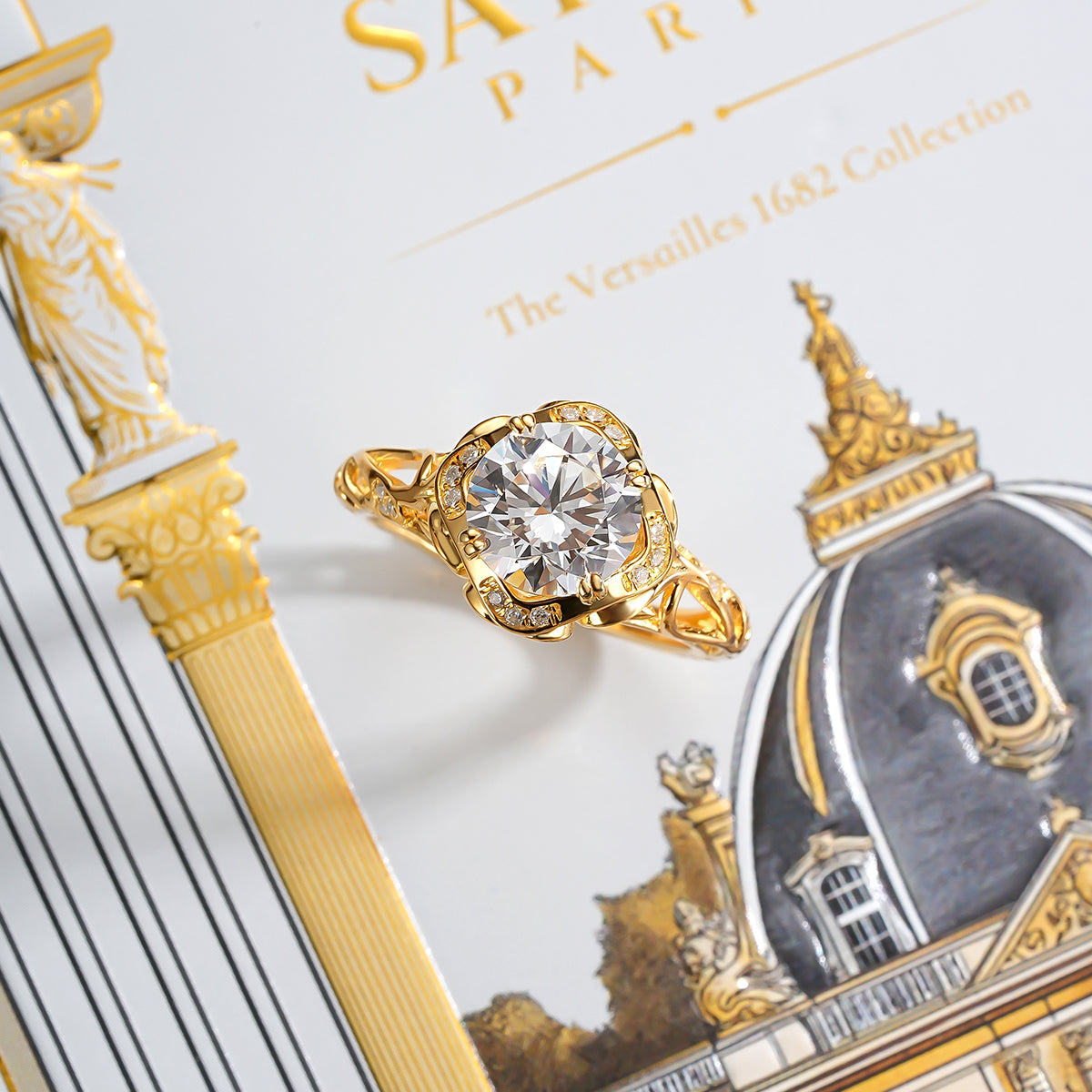
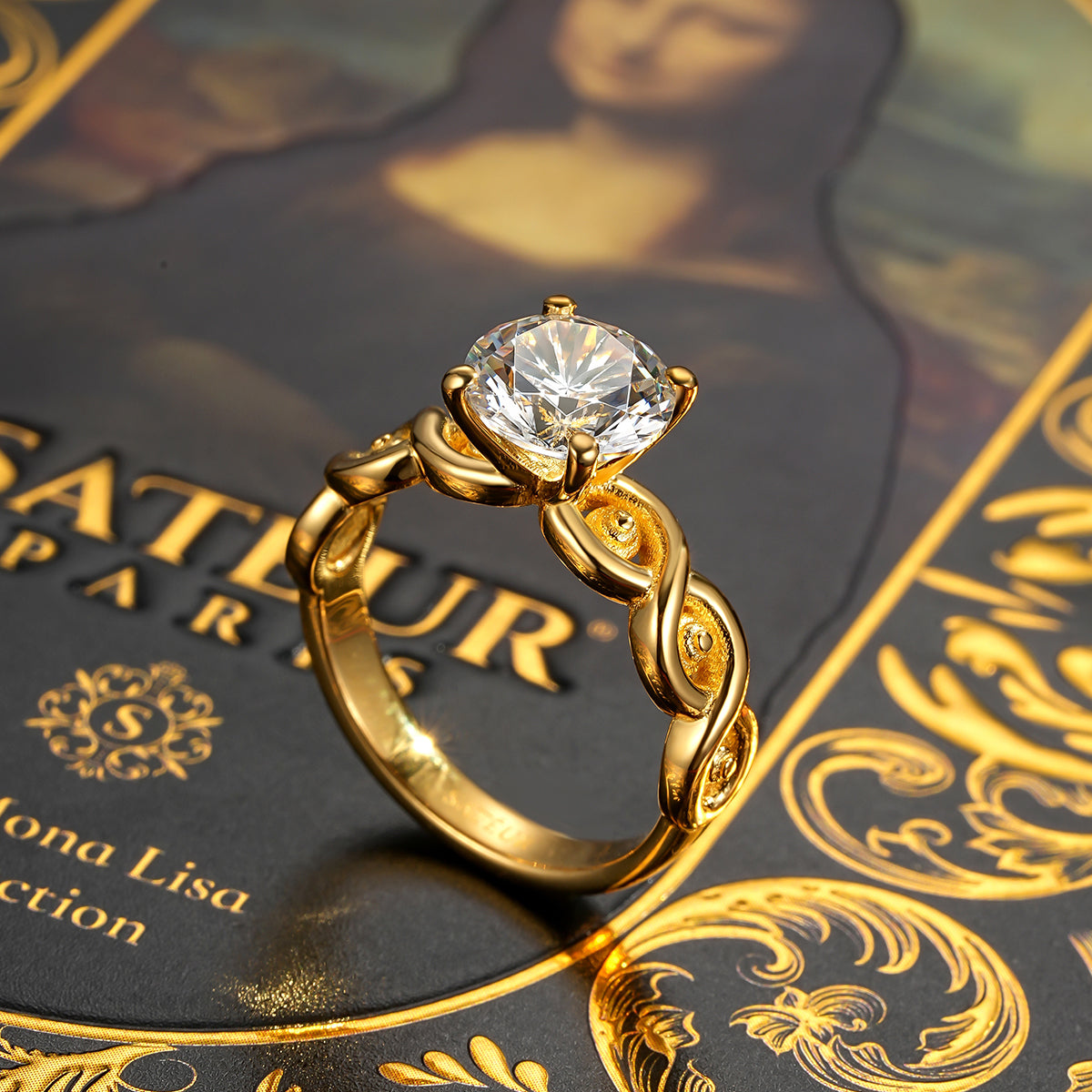
The signature Satéur Destinée Ring carries a trademarked diamond simulant with the clean, white brilliance of a flawless diamond — indistinguishable from a fine diamond with the naked eye — set on an 18k white-gold finish band, from $138 (≈¥21,500). The look of a flawless diamond, for 1% of the price.
With free delivery across Japan, 30-day returns and Lifetime Satéur Care, the hardest part of proposing in Japan is choosing the spot — not the ring.
Top 9 Romantics Proposal Places for the Perfect "Yes" in Japan !
Nine settings, nine different kinds of romance — sacred mountain, temple quiet, neon city skyline. Each entry includes the practical detail that makes the moment work: how to get there, when to arrive, and where to stand.
Mount Fuji

No silhouette says Japan like Fuji-san. The classic vantage is the northern shore of Lake Kawaguchi (Kawaguchiko), where on a still morning the whole cone doubles itself in the water — the 'Reverse Fuji'. Arrive at first light from the Oishi Park promenade or the Kawaguchiko Music Forest gardens; the mountain is clearest in the cold, dry hours of late autumn and winter, and almost always hides behind cloud by midday, so the question belongs to the dawn.
Kyoto

The old imperial capital is the most romantic city in Japan, and its signature backdrop is the endless vermilion tunnel of torii gates at Fushimi Inari-Taisha. Walk in before 7 am — the shrine never closes, and the lower gates are deserted at dawn before the day-trip crowds arrive from the station next door. For a quieter alternative, the bamboo grove at Arashiyama or the lantern-lit lanes of Gion at dusk give the same Kyoto magic with more privacy.
Tokyo Tower

The orange-and-white lattice tower is Tokyo's most romantic landmark after dark. Skip the crowded base and propose from a viewpoint that frames it: the rooftop garden at Roppongi Hills, the steps of Zojo-ji temple with the tower glowing behind, or a window table at a Shiba-koen restaurant. The tower lights switch on at sunset and the special 'Landmark Light' glows amber until midnight — aim for the first hour after the lights come up.
Himeji Castle

Japan's finest surviving feudal castle — a brilliant-white keep nicknamed the 'White Heron' and a UNESCO World Heritage Site. The best frame is from the西の丸 (Nishinomaru) garden or the approach across the moat, with the tiered roofs rising above the pines. Come at opening time or in the last hour before the grounds close; in early April the castle floats above a sea of cherry blossom, one of the most photographed scenes in the country.
Cherry Blossom in Tokyo

For a few fleeting days each spring, Tokyo turns pink — and few proposals are more cinematic than one under falling sakura. The Meguro River canal, lined with hundreds of trees that arch over the water and light up at night, is the city's most romantic stretch; Chidorigafuchi by the Imperial Palace moat is the classic, where you can take a rowboat beneath the blossom. Peak bloom usually lands in the last week of March — track the forecast, because it lasts barely a week.
The Great Torii of Miyajima

The vermilion gate of Itsukushima Shrine appears to float on the sea at high tide — one of Japan's three classic views and a place couples have considered sacred for centuries. Time the visit to the tide tables: high water for the floating reflection, low tide if you want to walk out across the sand to the base of the gate. The light is finest at sunset, when the torii is silhouetted against the Seto Inland Sea; stay the night on the island and you will have the shoreline almost to yourselves after the last ferry leaves.
The Golden Temple in Kyoto

Kinkaku-ji, the Golden Pavilion, is a Zen temple sheathed in gold leaf that mirrors itself perfectly in the pond at its feet — a setting that feels almost unreal. The viewing path is one-way and can be busy, so arrive the moment the gates open at 9 am for the calmest reflection and softest morning light. In winter a dusting of snow on the golden roof turns it into the single most beautiful image in Kyoto; a private moment is easier on a weekday, off-season.
Tokyo Skytree

At 634 metres, the Skytree is the tallest tower in Japan — and the Tembo Galleria observation deck wraps you in a glass spiral with the whole sprawl of Tokyo glittering below. Book a timed evening ticket for blue hour, when the city lights come up against the last of the sky; on a clear winter dusk you can see Mount Fuji on the horizon. For the tower itself in frame, the riverside promenade along the Sumida at Asakusa gives the postcard shot with the temple lanterns of Senso-ji in the foreground.
The Nara Deer Park

Nara Park is home to more than a thousand free-roaming sika deer, considered sacred messengers and famous for bowing for a cracker — a gentle, unexpected setting for a proposal. The most beautiful corner is the moss-covered stone-lantern path leading to Kasuga-Taisha shrine, or the lawns below the great hall of Todai-ji. Go early, before the tour buses, when the morning mist still hangs in the trees and the deer outnumber the people.
If several of these call to you, the one-day itinerary below threads the needle — and for ring guidance before the trip, see our guide to the best engagement rings in Japan.
Propose in Japan - Your Perfect 1-Day Itinerary

Nine spots is a list; a proposal needs a plan. This is the strongest one-day proposal itinerary in Japan — the Kyoto day, built around a sunrise question among the torii gates of Fushimi Inari — with a Mount Fuji alternative if you are based near Tokyo.
The evening before — Settle into a ryokan or hotel in central Kyoto, walk the lantern-lit lanes of Gion after dinner so you know exactly where you will return, check the next morning's sunrise time, and set the alarm without explaining why.
6:00 am — Up before the city wakes. A quiet taxi or the first train on the Nara Line to Inari station — the shrine sits directly outside.
6:30 am — Fushimi Inari at dawn. The shrine never closes, and at this hour the lower Senbon Torii — the famous thousand-gate tunnel — is almost empty. Walk up a few minutes to where the gates curve and the early light filters through the vermilion. One knee. If you have hired a photographer, they will already be in position.
8:30 am — Continue partway up the mountain to the Yotsutsuji intersection for a panorama over Kyoto, then back down for a celebratory breakfast in the lanes below the shrine.
10:30 am — Cross the city to Arashiyama: the bamboo grove early enough to beat the crowds, then a slow walk over the Togetsukyo bridge along the Katsura river.
1:00 pm — A long kaiseki or tofu lunch in a garden restaurant in the western hills.
3:30 pm — The afternoon for Kinkaku-ji, the Golden Pavilion, mirrored in its pond, or a tea house in Gion as the light softens.
6:30 pm — The celebration dinner. Book before you travel — Kyoto's best rooms fill weeks ahead, especially in cherry-blossom and autumn-leaf seasons.
Practical notes:
- Check the sunrise time for your month and aim to be at Fushimi Inari at least thirty minutes before the first tour groups — dawn is the whole point.
- Cherry-blossom (late March–early April) and autumn-foliage (mid–late November) are the most beautiful and the most crowded; book accommodation and dinner far in advance.
- Carry the box in a daypack, not a jacket pocket — pocket silhouettes have ended more surprises than rain.
Based near Tokyo instead? The same shape of day works around Mount Fuji: a pre-dawn drive or train to Lake Kawaguchi, the question on the northern shore as the 'Reverse Fuji' appears on the still water at sunrise, then a leisurely afternoon among the lakeside gardens and an onsen evening with the mountain in view.
Either way, the location is half the moment. The other half is in the box.
The Perfect Ring for the Perfect Proposal: Introducing the Satéur
Proposing in Japan with the Satéur Destinée Ring adds quiet luxury to the moment. A brilliant round-cut Satéur Gems® centre — available from 1 to 7 carats, colour D–F, cut Excellent — held in six slim prongs on an 18k white-gold finish band. The look is the one she has always imagined; the price is the part you will keep to yourself.

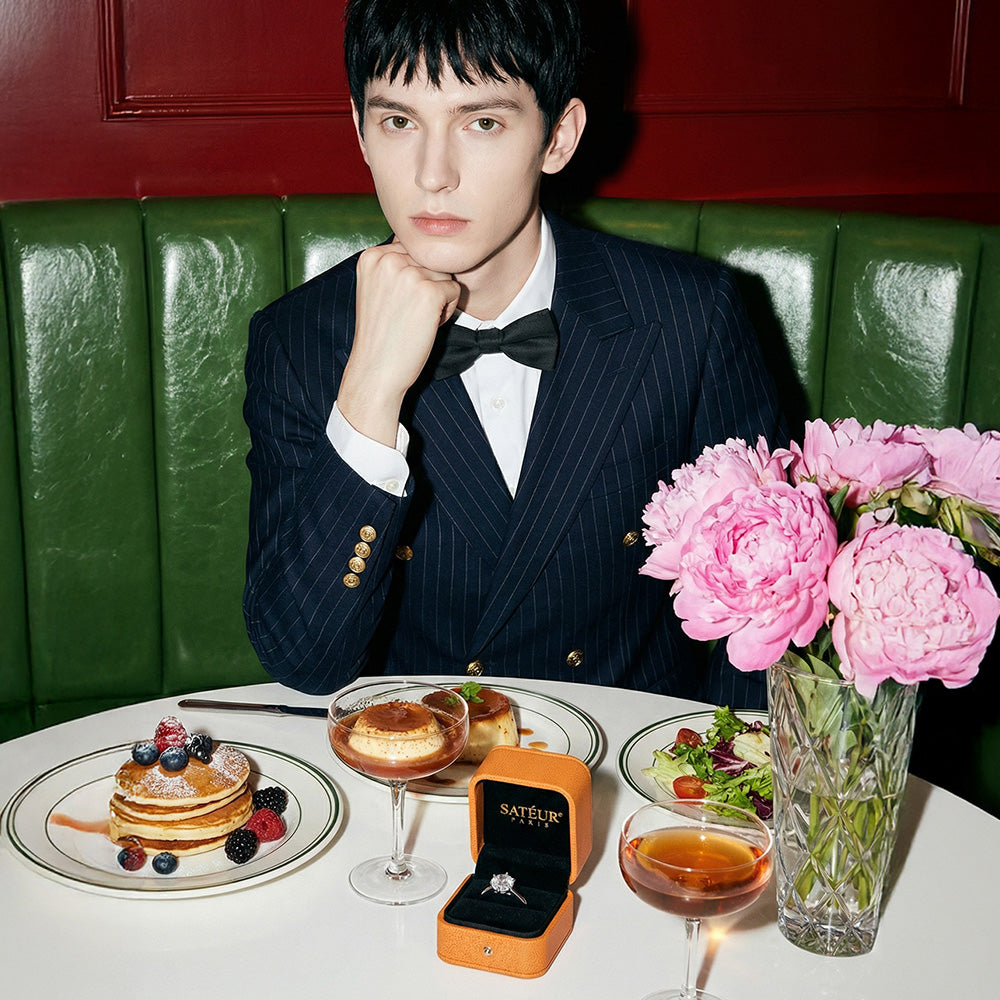
The ring arrives in the signature orange presentation box with built-in LED light — made for the moment the lid opens. Compare it to a $10,000 mined diamond across the table: The New Diamond Standard®.
Why couples choose Satéur:
- Value — gems crafted in-house, no middlemen; the saving goes into the moment, not the markup.
- Ethics — conflict-free by design, with no mined-diamond supply chain.
- Presentation — the orange leather box with built-in LED light, made for the reveal.
- Trust — 100,000+ customers across 150+ countries, 30-day returns, Lifetime Satéur Care.
- Free delivery to Japan — with express options to hotels for proposal trips.
The Destinée Ring is the No. 1 best seller — The 1% Ring® — but the collection spans over 100 designs across Satéur Gems®, moissanite and lab diamonds.

Comparison of Satéur Gems® with Traditional Diamonds
Set beside a mined diamond, Satéur Gems® hold their own: the same clean, white brilliance, indistinguishable from a fine diamond with the naked eye — from $138 (≈¥21,500) instead of five figures. Value is not what you pay. It is what you choose.

Moissanite — a lab-created gemstone with even more fire than a diamond, from ~$98 (≈¥15,200). Explore the moissanite collection.
Satéur Lab Diamonds — IGI-certified lab-grown diamonds with the identical brilliance and hardness of mined stones, without the mined-diamond supply chain.
Key Takeaways
- Satéur Gems® deliver the look of a flawless diamond for 1% of the price — from $138 (≈¥21,500).
- Moissanite offers even more fire than a diamond, from ~$98 (≈¥15,200).
- Every Satéur lab diamond carries an IGI certificate.
- Every ring ships in the orange presentation box, with 30-day returns and Lifetime Satéur Care.
Proposing in Japan : The Perfect Ring with Ethical and Environmental Considerations
An engagement ring should not begin with compromise. Diamond mining carries a heavy environmental footprint and a complicated human one; Satéur Gems® are crafted in-house — conflict-free, no mining, a fraction of the footprint — and priced so the proposal can fund the life that follows it.

For the proposal itself: the Satéur Destinée Ring — the look of a flawless diamond, from $138 (≈¥21,500), delivered free across Japan. Discover The 1% Ring®.
Conclusion
Choosing to propose in Japan is a monumental decision; the ring should be the easy part. Satéur's collection runs from lab diamonds and moissanite to the signature Satéur Gems® — crafted in-house, priced without middlemen, and finished in the orange box that makes the reveal.
Explore the full collection of 100+ engagement ring styles — and as you take this step, let Satéur be part of the story.

Satéur Destinée Ring™
The look of a flawless diamond — from $138, delivered free to Japan.
Compare to a $10,000 mined diamond
Joined by 100,000+ couples across 150+ countries.
Shop the Destinée RingFree worldwide shipping · 30-day returns · Lifetime Satéur Care
Frequently Asked Questions
Where is the best place to propose in Japan?
Kyoto is the most romantic city to propose in Japan — the vermilion torii tunnel of Fushimi Inari at dawn and the lantern-lit lanes of Gion at dusk are hard to beat. Close behind are Mount Fuji mirrored in Lake Kawaguchi at sunrise and the floating Great Torii of Miyajima on the Seto Inland Sea.
What is the best time of day to propose in Japan?
Dawn at the temples and golden hour by the lakes. Fushimi Inari and the Golden Pavilion are calmest and most beautiful first thing in the morning; Mount Fuji is clearest at sunrise before cloud builds; and city landmarks such as Tokyo Tower and the Skytree are at their best in the first hour after the lights come up.
Do I need a permit to propose in Japan?
No — a personal proposal at a public viewpoint, shrine path or park needs no permit. Commercial or pre-arranged photo shoots, tripods at some temples, and drone flights over crowded or restricted areas do require permission, so if you plan a styled shoot or aerial footage, check with the venue first.
How much does a proposal in Japan cost?
A proposal photographer in Japan typically runs ¥30,000–¥60,000 per hour, and most scenic viewpoints are free or carry a small shrine or observation-deck fee. The ring is the one cost you control completely: the Satéur Destinée Ring starts at $138 (about ¥21,500).
Which ring should I propose with in Japan?
The Satéur Destinée Ring — a trademarked diamond simulant with the clean, white brilliance of a flawless diamond, indistinguishable from a fine diamond with the naked eye, on an 18k white-gold finish band from $138 (about ¥21,500).
Does Satéur deliver to Japan?
Yes — Satéur delivers free across Japan, with Japanese-language support, 30-day returns and Lifetime Satéur Care, including express options to hotels for proposal trips.

















Leave a comment
This site is protected by hCaptcha and the hCaptcha Privacy Policy and Terms of Service apply.